

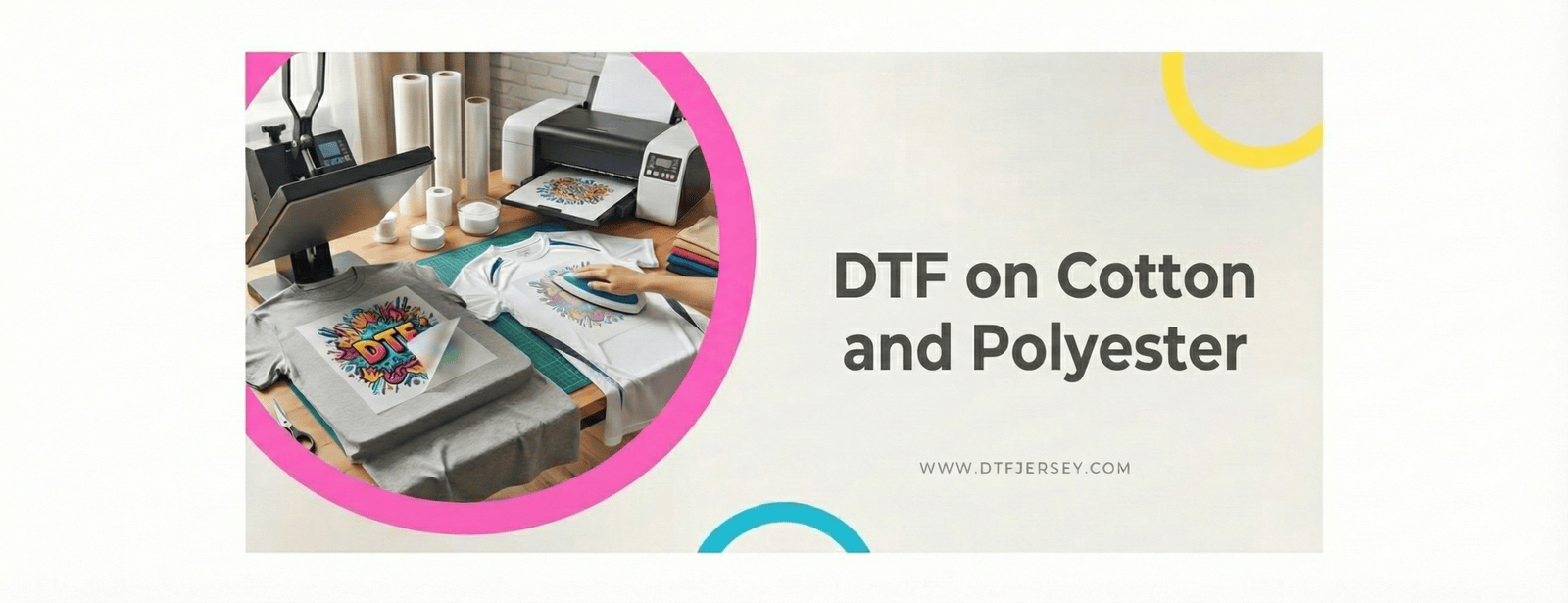
DTF Printing on Different Fabrics: Cotton vs Polyester Guide
The hallmark of a truly versatile apparel decoration technology is its ability to perform flawlessly across all major textile types. While traditional methods like Direct-to-Garment (DTG) printing are limited primarily to high-cotton content, Direct-to-Film (DTF) printing has revolutionized the industry by offering a single, high-quality solution for virtually any fabric.
To unlock DTF's full potential, you must master the application techniques for Cotton and Polyester. This guide provides a technical breakdown to help you master:
-
Low-temperature settings to prevent dye migration on synthetic fabrics.
-
High-pressure requirements for maximizing adhesion on natural cotton.
-
Precise application protocols for specialty fabrics like Nylon and Tri-Blends.
DTF Printing on 100% Cotton
Cotton remains the most common substrate and is the most forgiving material for DTF transfers. It offers a robust and reliable application environment.
The DTF Advantage on Cotton
The natural porosity of cotton fibers allows the Thermoplastic Polyurethane (TPU) adhesive to fully liquefy and sink slightly into the fabric weave. This creates a deep, mechanical lock that results in:
-
High Durability: The print becomes deeply integrated into the fabric.
-
Soft Hand-Feel: The finished print is pliable, smooth, and less noticeable than the thick layer left by traditional plastisol screen prints.
Cotton transfers should be applied with high pressure to ensure the adhesive penetrates the thick, natural fibers fully. This technique is key to maximizing the lifespan of your apparel.
DTF Printing on Polyester Fabrics
Polyester is essential for the activewear and uniform markets, but it poses two unique challenges for digital printing: thermal damage and the critical risk of dye migration.
The Technical Challenge: Dye Migration
Dye migration occurs when the dye used to color the polyester fabric (especially red, black, and dark blue) sublimates (turns into gas) under high heat and bleeds through the white underbase of the DTF transfer, resulting in a discolored or "muddy" appearance.
The Solution: Low-Temp Application
DTF successfully mitigates dye migration by allowing for low-temperature application compared to older transfer methods. The TPU adhesive is engineered to activate and fuse effectively at much lower temperatures.
Minimize the exposure time and use lower temperatures. The less time the polyester is exposed to high heat, the less likely the dye is to gasify and ruin the print.
The DTF benefit is clear: it eliminates the need for expensive, time-consuming dye-blocking vinyl or specialty barrier chemicals, making DTF the most reliable full-color solution for synthetics.
Temperature & Pressure Settings by Fabric
Mastering the precise combination of heat, time, and pressure is the foundation of maximizing DTF longevity and product quality.
DTF Printing Temperature Guide
| Parameter | 100% Cotton | 100% Polyester | Technical Rationale |
|---|---|---|---|
| Target Temperature | 320°F (160°C) | 280°F (138°C) | 280°F is the threshold for activating TPU while minimizing dye migration risk. |
| Time (1st Press) | 10 - 15 seconds | 8 - 10 seconds | Shorter time on polyester minimizes total heat exposure and prevents fiber scorching. |
| Pressure | High (50-60 PSI) | Medium-High (40-50 PSI) | High pressure for cotton's thick fibers; reduced pressure on poly prevents press marks. |
| Peel | Cold Peel | Cold Peel | Ensures the adhesive layer solidifies for the cleanest, most reliable separation. |
| Re-Press (Post-Peel) | Recommended (5-8 seconds) | Optional, Very Short (3-5 seconds max) | Re-press is critical but must be minimized on polyester to reduce total heat time. |
Cotton-Poly Blend Considerations
Cotton-polyester blends (often 50/50 or 60/40) are popular for their balance of softness and anti-shrink properties.
-
The Golden Rule: When pressing blends, always treat the garment like the most heat-sensitive fiber present.
-
Application: Use the settings for 100% Polyester (280°F for a short time) to protect the synthetic components. Maintaining medium-high pressure is key to pushing the adhesive past the poly fibers into the cotton elements of the blend.
The DTF adhesion on blends is highly successful because the TPU adhesive bonds strongly to both fiber types simultaneously, making the result often more durable than DTG on the same fabric. This versatility is key to maximizing your ROI.
Best Fabrics for DTF Transfers
DTF's unique polymer-based adhesion makes it highly effective on a range of materials that prove difficult or impossible for other digital methods.
| Fabric Type | DTF Performance | Notes |
|---|---|---|
| 100% Cotton | Excellent Hand-Feel & Durability | Easiest to press; excellent mechanical lock. |
| 100% Polyester | Excellent Adhesion, High Versatility | Requires strict low-temp/short-time protocols to prevent dye migration. |
| Nylon & Lycra | Exceptional Adhesion (Market Advantage) | Press at the lowest possible temperature (260°F) for the shortest time. DTF is one of the few methods that can reliably bond to nylon due to the unique TPU adhesive used in our transfers. |
| Tri-Blends | Very Reliable | Treat as Polyester (280°F); provides excellent wash durability. |
| Specialty (Canvas, Denim, Leather/Faux Leather) | Strong & Consistent Bond | DTF offers a strong digital alternative to screen printing on thick, non-porous materials. |
This unparalleled versatility allows businesses to diversify their product line without investing in specialized inks or equipment.
Troubleshooting Common Fabric Issues
The key to preventing common fabric issues is standardization. By documenting and following precise settings for each fabric type, you ensure a strong, long-lasting bond across your entire product line.
| Issue | Fabric Type | Root Cause | Solution |
|---|---|---|---|
| Dye Bleeding/Fading | Dark Polyester | Pressing temp/time was too high, causing dye sublimation. | Reduce temperature to 280°F and reduce press time to 8-10 seconds. |
| Heat Press Marks | Polyester / Light Synthetics | Pressure was too high on the smooth surface. | Reduce PSI to Medium-High and use a Teflon or parchment pillow inside the garment. |
| Print Peeling | Cotton / Blends | Insufficient pressure or the transfer was peeled hot (when it should have been cold). | Increase pressure to High and ensure the print is completely cold before peeling. |
The versatility of DTF printing is its defining feature. By mastering the application process, using a higher temperature and time for robust Cotton, and always using a lower temperature and shorter time for heat-sensitive Polyester and Nylon, you eliminate common production risks like scorching and dye migration.
This mastery ensures a strong, long-lasting bond across your entire product line, reinforcing your brand's reputation for quality, whether you are printing on a soft cotton tee or a technical polyester hoodie.
Ready to expand your product catalog into specialty fabrics like nylon and polyester? Order your custom DTF transfers today and start capitalizing on the versatility advantage.

%20printing%20...)