
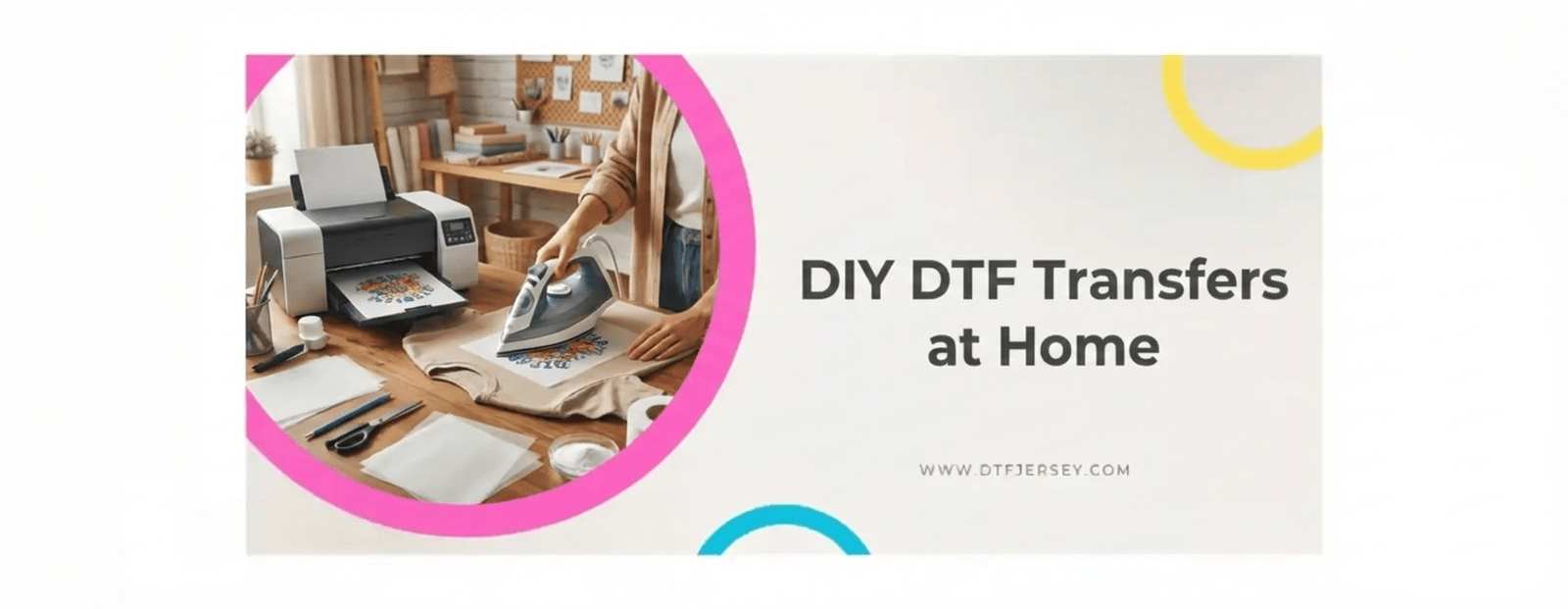
DIY DTF Transfers at Home: Equipment, Process & Reality Check
The rise of Direct-to-Film (DTF) printing has brought a new wave of interest from hobbyists and small entrepreneurs eager to bypass outsourcing and produce custom apparel in their own homes. The promise of DTF printing for beginners often sounds simple: print, powder, press.
However, the reality of producing consistent, commercial-grade DTF transfers requires specialized equipment, a precise workflow, and significant maintenance protocols that quickly push the process beyond the realm of a simple DIY project. Unlike vinyl cutting or even desktop sublimation, DTF is an industrial process adapted to small formats.
This guide provides a comprehensive reality check for those asking how to make your own dtf transfers at home. We will detail the exact equipment, review the necessary printer conversions, and outline the true cost of attempting a professional DTF setup at home versus relying on established services.
Can You Make DTF Transfers at Home? The White Ink Problem
Technically, yes, you can produce DTF transfers at home, but the feasibility of producing consistent, high-quality, profitable transfers is low.
The core challenge lies in the nature of DTF consumables, particularly the White Ink, and the mandatory steps required for curing.
- The Volatility of White Ink: DTF technology requires a thick layer of specialized white ink (containing titanium dioxide) to serve as the base. This pigment rapidly settles when the printer is idle, leading to immediate nozzle clogging.
- Maintenance Required: Professional DTF printers mitigate this with built-in recirculation and agitation systems that constantly stir the white ink—features universally absent from standard desktop printers.
- Safety and Consistency: You must evenly distribute the thermoplastic powder and then cure it (melted) in a dedicated oven or press, posing ventilation and consistency challenges in a home environment.
Attempting to produce transfers without these specialized systems leads to frequent clogs, wasted film, inconsistent powder application, and high equipment downtime. Learn more about the DTF process and its full capabilities here.
Equipment Needed for DIY DTF (The Minimalist Setup)
To achieve even minimal commercial-grade results, the home DTF setup requires five essential components, significantly exceeding the complexity of a standard home office.
The Five Critical Investment Areas:
- DTF Printer (or Conversion Kit): Requires specialized channels, including a dedicated double channel for White Ink. The cost varies from $3,500 to $7,000+ for a reliable model.
- White Ink Recirculation/Agitation System: Essential to prevent the pigment from settling and destroying the printhead.
- RIP Software (Raster Image Processor): Specialized software required for color control and generating the white ink layer, with initial costs ranging from $200 to $500.
- Curing Station (Oven or Curing Unit): Necessary to evenly melt the thermoplastic powder for proper adhesion. A standard heat press is insufficient for high-volume curing.
- Adhesive Powder and Films: High-quality Thermoplastic Polyurethane (TPU) powder and PET film rolls or sheets.
Converting Inkjet Printers for DTF
Many resources suggest converting existing low-cost desktop inkjet printers (such as specific Epson EcoTanks) for DTF use. This process involves significant hardware and software modifications.
The High-Risk Conversion Process
The procedure to convert a standard printer carries a high risk of permanent damage and includes:
- Hardware Modification: The printer requires a specialized waste tank system and often needs hardware adjustments to handle the thicker PET film.
- Ink Replacement & Flushing: You must thoroughly flush all standard inks and charge the entire system with specialized DTF inks. This process carries a high risk of permanently damaging the printhead.
- Software Bypass: The printer must be modified to utilize specialized DTF RIP software for color control and white ink layering.
Reality Check: Converting a standard printer results in a fragile, high-maintenance machine without the necessary commercial features. The high likelihood of printhead failure and the time spent troubleshooting often negate the initial savings. Avoid this risk by ordering transfers guaranteed to work.
Can Sublimation Printers Do DTF?
No, a printer dedicated solely to Sublimation cannot efficiently or effectively perform DTF printing, nor should it be attempted.
The fundamental incompatibility lies in the ink and hardware:
- Incompatible Inks: Sublimation uses dye-based inks that gasify under heat. DTF uses pigment-based inks that form a solid polymer layer. Dye ink will not adhere to the TPU powder.
- Missing White Channel: Sublimation printers operate only in CMYK, lacking the dedicated white ink channel (WW) required to print the essential underbase layer for opacity on dark garments.
- Maintenance Difference: Sublimation inks do not settle and require low maintenance. DTF white ink requires constant agitation and recirculation systems, which are physically absent in sublimation models.
True Cost of Home DTF Setup (ROI Reality Check)
When evaluating whether DIY DTF is financially viable, entrepreneurs must compare the operational expenditure (OpEx) versus the cost of outsourcing.
| DTF Investment: DIY vs. Outsourcing (Example for $500/year in Transfers) | DIY Setup (Minimum Estimate) | Professional Outsourcing (DTF Jersey) |
|---|---|---|
| Initial Equipment Cost (CapEx) | $3,500 – $7,000+ | $0 (Only cost per transfer) |
| Maintenance Risk | HIGH (Printhead failure \= $300-$1,300 per incident) | $0 (Supplier absorbs all risk) |
| Operational Costs (OpEx) | $500 – $1,500/year (Ink, Powder, Film, Cleaning) | $500/year (Transfer cost only) |
| Time Investment (Labor + Maintenance) | 20+ hours/month (Troubleshooting/Cleaning) | 0 hours (No maintenance time) |
The DIY setup only becomes financially viable if a business prints thousands of transfers per month to offset the high capital and maintenance costs. For the majority of small businesses, outsourcing offers superior financial predictability.
DIY DTF vs Professional Services (Predictability vs Risk)
The decision to choose DIY or professional outsourcing is a choice between control/risk and predictability/profit. The core choice is simple: Control & High Risk or Predictability & Scalable Profit.
DIY Home DTF is Defined By:
- Quality Consistency: Poor. Prone to streaking, clogging, and misprints due to lack of industrial equipment.
- Maintenance Risk: High. White ink settling and printhead failure are constant threats.
- Labor Time: Very High. Hours are spent troubleshooting and cleaning, not generating revenue.
Professional Service (DTF Jersey) Guarantees:
- Quality Consistency: Excellent. Uses industrial-grade equipment with calibrated RIP software.
- Maintenance Risk: Zero. The supplier absorbs all costs and risks of failure.
- Predictable Turnaround: High. Guaranteed turnaround times allow businesses to manage customer expectations.
While the appeal of making your own dtf transfers at home is understandable, the technical realities of white ink maintenance, expensive printer conversions, and the complexity of the curing process make it financially and operationally unsound for most small-to-medium apparel businesses.
DTF is a process that requires industrial-level consistency to succeed commercially. By choosing professional DTF transfers, you eliminate the $4,000+ equipment burden, remove the constant threat of printhead failure, and free up critical entrepreneurial time. Focus on what generates revenue: sales and marketing.
Stop troubleshooting clogged nozzles and start selling. Upload your designs now to receive perfectly cured, ready-to-press transfers. Start your professional order today and experience true consistency.

%20printing%20has%20brought%20a%20new%20wave%20of%20interest%20from%20hobbyists%20and%20small%20entrepreneurs%20eager%20to%20bypass%20outsourcing%20and%20produce%20custom%20apparel%20in%20their%20own%20homes.%20The%20pr...)