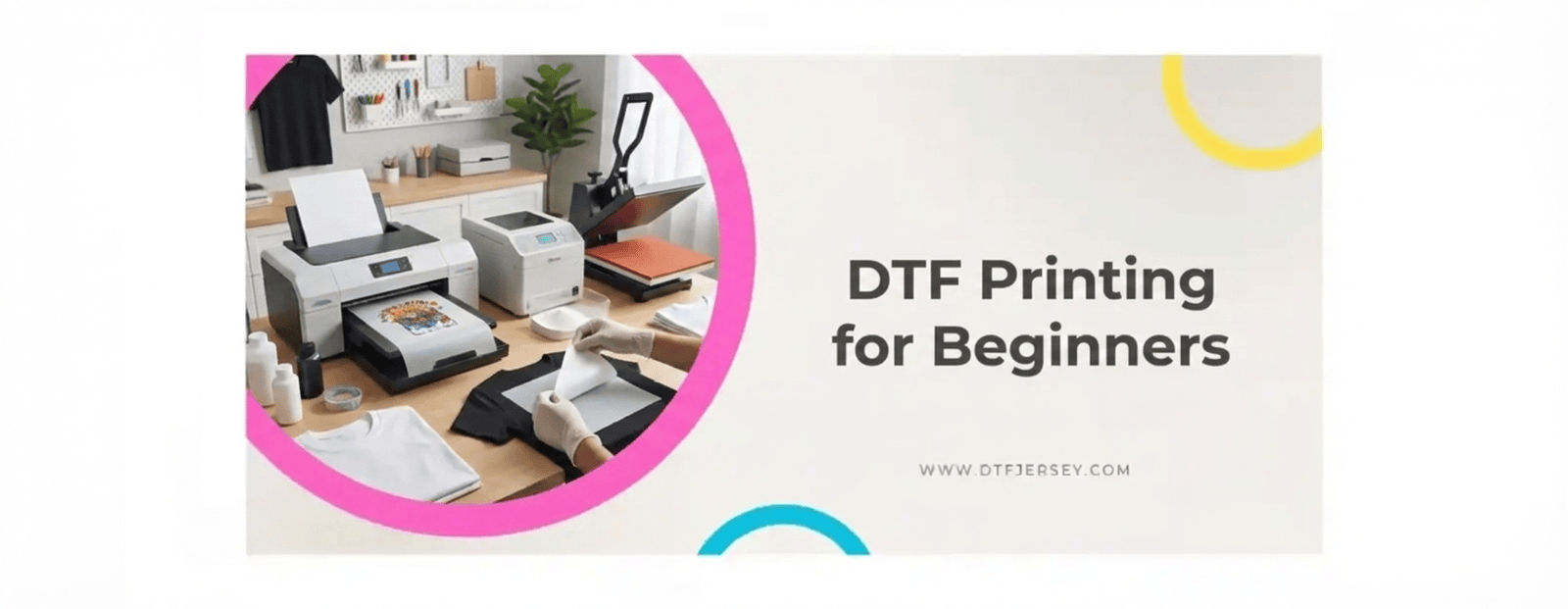
DTF Printing for Beginners: Start Your Custom Apparel Business
Starting a custom apparel business has never been more accessible. Driven by high demand for personalized products and the versatility of modern printing technology, the barriers to entry are significantly lower than they were a decade ago. For beginners, the core decision requires you to choose the right technology that balances quality, scalability, and startup cost.
Direct-to-Film (DTF) printing has quickly become the technology of choice for entrepreneurs because it solves the biggest problems faced by new businesses: low minimum order quantities (MOQs) and full-color complexity.
This comprehensive guide is designed for you—the ambitious beginner. We will walk you through the essential steps to launch, focusing on minimizing financial risk, maximizing profit margins, and helping you answer the crucial question: What is the true dtf printing business startup cost?
Getting Started with DTF Printing
Mastering two core components will determine the success of your new business: Quality Control and Efficient Fulfillment.
Step 1: Define Your Niche and Audience
Before investing in anything, identify who you serve. Are you targeting B2B corporate events, school sports teams, or fashion-forward e-commerce consumers? Your niche dictates the volume, complexity, and most importantly, the fabric type you will specialize in.
Step 2: Master the Application Process
Since DTF involves two main steps—Transfer Production and Transfer Application—your primary responsibility as a beginner is to master the application phase: the heat press.
Invest time in understanding the relationship between heat, time, and pressure for different fabrics. Application errors are the most common cause of early customer complaints. Fortunately, the DTF application process is clean, fast (typically 15-20 seconds per garment), and requires no specialized ventilation beyond a heat press and a dedicated table.
Essential Equipment & Startup Costs
For any apparel business, the dtf printing equipment list can be broken down into two tiers: the Absolute Essentials and the High-Risk Production Gear.
Tier 1: Absolute Essentials (Mandatory for Launch)
These are the only tools you need for fulfillment when you outsource transfer production:
| Component | Purpose | Estimated Cost (Commercial Quality) |
|---|---|---|
| Heat Press | Applying the transfer permanently to the garment. | $600 – $1,500 (Clamshell or Swing-Away) |
| Computer/Software | Design and order management (Photoshop/Illustrator or design alternatives). | $500 – $1,500 (Existing equipment often sufficient) |
| Garment Blanks | Inventory (T-shirts, hoodies, hats). | Variable |
| Consumables | Teflon sheets, parchment paper, heat gloves. | $50 – $100 |
Total Startup Cost (Outsourcing Model): $1,150 - $3,100
Tier 2: High-Risk Production Gear (Avoid This Investment)
-
DTF Printer (Converted or Dedicated): $3,500 – $7,000+
-
Curing/Shaking Unit: $500 – $2,000
-
Inks, Powder, and Film Inventory: $500+
-
Recirculation/Agitation System (Necessary maintenance): $500+
Choosing Between DTF Service or Equipment
This is the most critical strategic decision for any new DTF business.
The core choice is simple: Control & High Risk or Predictability & Scalable Profit.
| Decision Factor | In-House Equipment Production (DIY) | Outsourcing to DTF Service (DTF Jersey) | Recommendation for Beginners |
|---|---|---|---|
| Initial Capital Investment | HIGH ($4,000+) | LOW ($1,150 for press only) | Outsourcing |
| Technical Risk | VERY HIGH (Printhead clogs, color calibration) | ZERO (Risk absorbed by supplier) | Outsourcing |
| Focus/Time Allocation | Maintenance, Troubleshooting, and Production | Sales, Marketing, and Customer Service | Outsourcing |
| Cost Predictability | Variable (Due to waste, maintenance, and utility bills) | Fixed (Known cost per transfer/unit) | Outsourcing |
By partnering with a professional transfer service, you eliminate the high dtf printing equipment list and the steep learning curve. This allows you to Validate the Market Faster and Scale On Demand. Start your low-risk, high-profit partnership today by ordering your custom transfers.
Finding Your First Customers (Depth Added)
Your DTF capability gives you a crucial competitive advantage: versatility and low minimums. Leverage this versatility to target high-value customer segments:
1. Local Businesses & Corporations (B2B): This is often the highest-margin segment. Approach local companies offering personalized uniforms, corporate event giveaways, or internal merchandise. DTF’s full-color capability on specialized materials, like dark polos or high-end jackets, is highly attractive where screen printing requires expensive setups. Focus on providing quick turnarounds for their recurring needs.
2. School/Sports Teams: Target small leagues, local school booster clubs, or individual teams rather than large districts. DTF easily handles polyester uniforms and small-batch fan gear where screen printing MOQ's are too high. Because DTF works well on different fabric blends, you can upsell parents on hats and hoodies alongside the performance jerseys.
3. Online Niche Communities: Focus on highly specific fandoms, hobbies, or local memes. The ability to offer one-off, high-quality, full-color designs for limited runs is a perfect DTF application. These communities value unique, detailed graphics, which DTF executes flawlessly, enabling premium pricing strategies.
4. E-commerce (Print-on-Demand): DTF is ideal for streamlining e-commerce inventory. You can keep a stock of transfers for your best-selling designs and can keep them in stock and apply them as orders come in. This simplifies inventory management, eliminates the risk of unsold printed goods, and offers fast, flexible fulfillment.
Common Beginner Mistakes to Avoid (Depth Added)
New apparel businesses often make avoidable mistakes that can lead to high costs and early failure. Understanding these pitfalls ensures your immediate focus is on profitability:
1. Not Valuing Time (The DIY Trap): The most costly mistake is believing that doing everything in-house saves money. The time spent cleaning clogged printheads, troubleshooting misaligned conversions, or scraping wasted transfers is time lost on sales. Your time is your greatest asset; see why outsourcing production is the profitable strategy rather than focusing on low-margin production tasks.
2. Poor Heat Press Application: Never underestimate the need for consistent, commercial-grade heat presses. Using hobby presses leads to cold spots and uneven pressure, which cause transfers to peel during the first wash. Invest in a reliable clamshell or swing-away press to maintain quality control. Remember, a perfectly produced transfer is useless if the application is flawed.
3. Undervaluing Full-Color: DTF is a full-color digital process. Avoid pricing complex, full-color DTF prints the same as simple one-color screen prints. DTF offers high value and full color without setup fees; price your products to reflect the superior quality, durability, and complexity of the design. Educate your customers that full-color graphics are now accessible even for single-item orders.
4. Ignoring Fabric Settings: Applying the same heat press settings to 100% cotton and 100% polyester is a guaranteed way to damage expensive garments. The high heat required for cotton will melt polyester or cause dye migration. You must follow precise application protocols for every fabric to ensure professional results and garment longevity.
Scaling Your DTF Business
Scaling with DTF is straightforward because the technology is designed for growth. Since you have zero CapEx risk, your focus is entirely on increasing sales volume.
-
Expand Product Range: Use DTF's versatility to move beyond tees (e.g., hats, jackets, specialty bags, leather patches). This increases the average order value.
-
Streamline Fulfillment: As order volume increases, upgrade your heat press (e.g., from a clamshell to a high-volume auto-open model) to cut down on application time.
-
Optimize Design Workflow: Use design templates and standardized mockups to reduce the time spent per customer.
-
Know Your Costs (and Margins): Constantly track your cost per transfer, labor per application, and profit margin per garment type. The ability to predict costs precisely is the foundation of high-margin scaling.
For beginners looking to launch a profitable custom apparel line, DTF printing offers the highest quality, lowest risk, and most flexible entry point.
By choosing to partner with a professional DTF service, you immediately bypass the steep learning curve and the high $4,000+ startup cost associated with equipment. You eliminate technical risks and free up your capital and time to focus on the activities that truly drive business success: finding customers, designing compelling merchandise, and building a loyal brand.
Ready to launch your business with minimal startup cost and maximum quality assurance? Get started today by ordering your first batch of perfectly produced DTF transfers. Start your professional order today and experience true consistency.