Printing on Moisture-Wicking Shirts: Methods, Settings, and What Actually Works
Moisture-wicking shirts are everywhere a printer looks: team jerseys, gym wear, staff polos for summer shifts, 5K race tees. They are also where a lot of print jobs go wrong. The same synthetic knit that pulls sweat away from skin is heat-sensitive, low in cotton, and prone to dye migration, which rules out some printing methods entirely and punishes sloppy settings on the rest.
This guide covers why these fabrics are tricky, how the main printing methods compare on them, and the press playbook that keeps a performance-fabric run clean.
- Why Moisture-Wicking Shirts Are Tricky to Print
- Best Printing Method for Moisture-Wicking Shirts: How They Compare
- Why DTF Fits Performance Fabric
- The Press Playbook for Moisture-Wicking Shirts
- Dye Migration: The Problem That Shows Up Late
- Durability Through Workouts and Wash Days
- Where Performance Printing Pays Off
- Frequently Asked Questions
Why Moisture-Wicking Shirts Are Tricky to Print
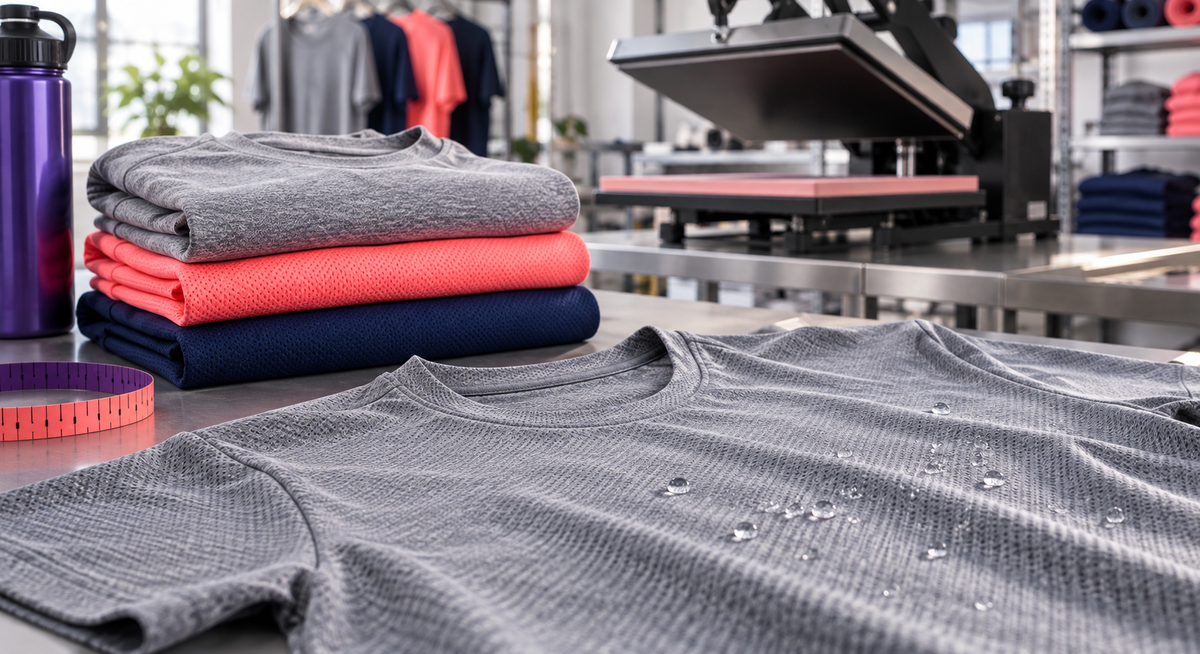
Moisture-wicking fabric is usually 100% polyester or a high-polyester blend, knit thin and often treated with performance finishes. Three properties make it a different printing problem than a cotton tee:
None of these rule out printing. They rule out guessing.
Best Printing Method for Moisture-Wicking Shirts: How They Compare
Every major decoration method can touch performance fabric. They are not equally practical:
Why DTF Fits Performance Fabric
DTF solves the two structural problems at once. The white ink layer under every design means garment color stops mattering: the same artwork reads at full strength on a white race tee and a black gym shirt, with no dye-blocker screens and no pretreatment step. And because the design travels on a carrier film and bonds through a heat-activated adhesive, one transfer order covers a mixed batch: cotton spirit tees for the volunteers, poly performance shirts for the runners, all from the same artwork.
There is no minimum order, so a single test shirt costs you a test shirt, not a production run. That matters more on performance fabric than anywhere else, because the test press is the step that saves these jobs.
The Press Playbook for Moisture-Wicking Shirts
Settings vary by press and film, so always follow the instructions supplied with your transfer. On top of that, these habits keep a performance-fabric run clean:
🔥 DTF Jersey Press Specs (General Guidance)
For the fabric-by-fabric temperature breakdown, see the DTF transfer temp guide, and the step-by-step pressing instructions walk through the full sequence.
Dye Migration: The Problem That Shows Up Late
The defenses are the ones already in the playbook: the lower end of the temperature range, short dwell times, and a next-day check on the test shirt before a full run on bright or dark polyester. If a print does come out wrong, work through the variables one at a time rather than assuming a single culprit: our guide to DTF printing problems covers the diagnosis.
Durability Through Workouts and Wash Days
A moisture-wicking shirt lives a harder life than a retail tee: worn for sweat-heavy sessions, washed after every wear, and stretched in every direction while it's on.
Care still matters, and athletic wear gets washed more than anything else in the drawer:
Our durability and care guide has the full routine worth passing along to buyers.
Where Performance Printing Pays Off
Once the playbook is dialed in, moisture-wicking work opens some of the steadiest order types in custom apparel:
Whatever the use case, the order path is the same: prep artwork as a transparent PNG at 300 DPI, browse the DTF transfers collection, and pair the run with blank apparel if you want garments and transfers from one place. No minimums, same-day processing before 3:00 PM ET, and Elmwood Park pickup before 4:00 PM ET on business days.
Performance Fabric, Handled
Full-color transfers that work on light and dark moisture-wicking shirts. No minimums, test a single shirt before the batch, same-day options in NJ.
Browse DTF Transfers → Build a Team Gang SheetFrequently Asked Questions
Can you print on moisture-wicking shirts?
Yes. DTF Jersey transfers print on moisture-wicking polyester and performance blends with a white ink underbase, so the design reads correctly on both light and dark shirts with no pretreatment. The fabric is heat-sensitive, so stay at the lower end of the press temperature range and test one shirt before running the batch.
What is the best printing method for moisture-wicking shirts?
DTF is the most practical method for most jobs: it handles light and dark polyester, prints full color with no per-color charges, and needs no pretreatment. Sublimation only works on white or very light polyester, screen printing needs low-cure inks and volume to justify setup, and heat transfer vinyl suits only simple one-color designs. Start with a single DTF Jersey test transfer to confirm the result on your exact blank.
What heat press settings should I use for moisture-wicking shirts?
Start from the standard DTF Jersey range of 290 to 310°F with high pressure for about 6 seconds or medium pressure for 8 to 15 seconds, and stay at the lower end of that temperature range on thin synthetics. Use a hot peel, keep the pre-press short, and follow the instructions supplied with your specific transfer, since settings vary by press and film.
Does DTF work on 100% polyester shirts?
Yes. DTF Jersey transfers apply to 100% polyester and performance blends; adhesion is typically strongest on fabrics with at least 50% cotton, so polyester simply calls for a test press first. Press at the lower end of the temperature range and check the test shirt the next day for dye migration before committing a full run on bright or dark polyester.
How do I avoid scorching and dye migration on performance shirts?
Keep heat low and dwell short: work the lower end of the 290 to 310°F range, keep the pre-press to a few seconds, use a cover sheet, and position designs on flat panels away from seams. Dye migration can appear hours after pressing, so inspect the test shirt again the next day. If a print still comes out wrong, check temperature, time, pressure, and fabric one at a time rather than assuming a single cause.
Will a DTF print survive workouts and frequent washing?
Yes. DTF Jersey transfers are Intertek-tested for 100+ wash cycles with no major cracking, peeling, or color fading when applied correctly, and the thin ink layer flexes with the knit. Wash inside out in cold water, skip bleach and fabric softener, and hang dry or tumble dry on low to protect both the print and the wicking finish.