
DTF on Polyester: The Ultimate Guide to Printing on Synthetic Fabrics
For years, the apparel decoration industry faced a significant hurdle: polyester. While cotton is easy to print on, synthetic fabrics are notorious for being heat-sensitive and prone to dye migration. If you’ve ever seen a white logo turn pink, you’ve seen the struggle of printing on polyester.
Enter DTF (Direct to Film). DTF technology has revolutionized how we handle synthetic textiles. This guide explores why DTF on polyester is the superior choice for modern decorators and how to achieve retail-quality results on everything from moisture-wicking tees to high-performance nylon gear.
Why DTF on Polyester is a Game Changer
Polyester is the king of the activewear and "athleisure" markets, but it requires a specialized approach. DTF on polyester succeeds where other methods fail because it creates a mechanical bond rather than a chemical one.
- No Dye Migration: Unlike sublimation, where the ink turns into a gas and can bleed through the design, DTF transfers use a specialized adhesive powder that acts as a barrier, keeping your colors crisp and true.
- Low-Heat Application: Most DTF transfers from Iris DTF can be applied at lower temperatures (260°F to 285°F), which is critical for preventing "scorching" or "shining" on delicate synthetic fibers.
- Vibrant Opacity: Even on dark navy or black polyester, DTF provides a solid white underbase that ensures colors pop with professional intensity.
Preventing the "Bleed": Solving Dye Migration
The biggest threat when working with DTF on polyester is dye migration. This happens when the heat from the press re-activates the garment's original dyes, causing them to seep into your white ink.
To prevent this, Iris DTF recommends:
- Lowering the Heat: Higher temperatures trigger migration. Keep your press between 260°F and 275°F for high-migration fabrics (like 100% red or camo polyester).
- Using a "Blocker" Powder: If you are dealing with particularly stubborn fabrics, using a black-backed or "subli-blocker" adhesive can provide an extra layer of protection.
- Pressure Management: Use medium pressure. Over-pressing can force the ink too deep into the fibers, increasing the chance of dye contact.
Mastering DTF on Other Synthetic Blends
While polyester is the primary focus, the versatility of Iris DTF transfers extends to other challenging synthetics.
Nylon & Windbreakers
Nylon is notoriously smooth and water-resistant. Traditional inks often peel right off. However, the thermoplastic adhesive used in our transfers "bites" into the nylon weave, providing a durable bond that resists the elements.
Spandex and High-Stretch Fabrics
Athletic jerseys and compression gear require extreme flexibility. Our DTF on polyester and spandex blends maintains a "memory stretch"—meaning the design expands with the athlete and snaps back to its original shape without cracking.
DTF vs. Traditional Methods for Synthetics
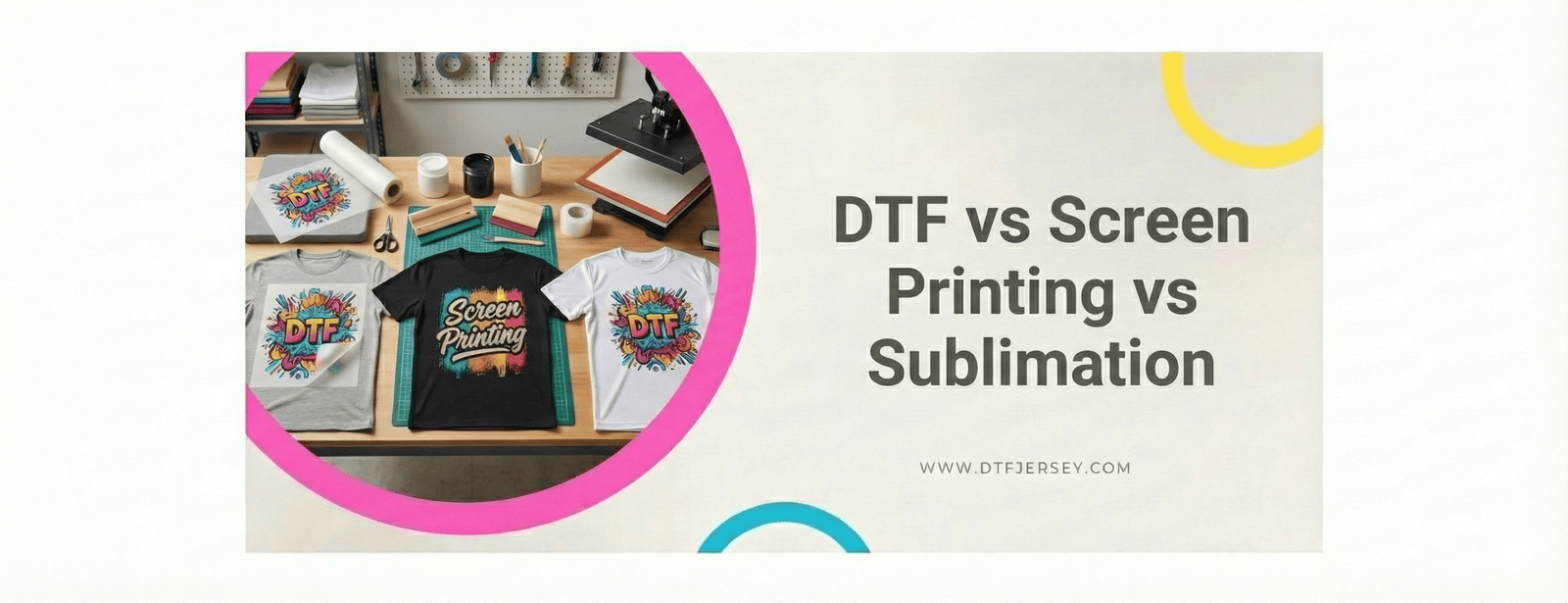
| Feature | Screen Printing | Sublimation | DTF on Polyester |
| Full Color | Expensive (Multiple screens) | Only on Light colors | Unlimited colors on any fabric |
| Dye Migration | High Risk | Guarenteed on darks | Low to None |
| Feel/Texture | Heavy/Thick | No feel | Soft, Thin, and Flexible |
| Setup Time | High (Hours) | Low | Zero (Peel and Stick) |
Step-by-Step Best Practices for Polyester Success
- The Pre-Press: Press the garment for 3–5 seconds to remove moisture and flatten the fibers.
- Alignment: Place your Iris DTF transfer. Use the transparency of the film to ensure perfect centering.
- The Primary Press: Press at 275°F for 10–12 seconds with medium pressure.
- The Cool Down: Most high-quality polyester transfers are "Cold Peel." Wait for the film to reach room temperature before removing it.
- The Finishing Press: Cover with a Teflon or parchment sheet and press for another 5 seconds to "lock" the design into the fabric texture.
Whether you are branding a local sports team or launching a premium streetwear line, mastering DTF on polyester is the key to business growth. It offers the durability of screen printing with the ease of a heat transfer, all while solving the age-old problem of fabric sensitivity.
Ready to level up your athletic apparel?Order your DTF Jersey Transfers today and see why pros are making the switch to the most versatile printing method on the market.
Frequently Asked Questions
1. Can I use the same heat settings for cotton and polyester?
No. Cotton can handle higher heat (300°F+), but for DTF on polyester, you should lower the temperature to around 275°F to avoid damaging the synthetic fibers and to minimize dye migration.
2. Is DTF printed on polyester truly "wash-safe"?
Yes. When applied correctly with DTF Jersey transfers, the bond is industrial-strength. It can withstand 50+ wash cycles without peeling or cracking, provided you follow the "Cold Wash/Low Tumble" recommendations common for athletic gear.
3. Does DTF work on 100% polyester "dry-fit" shirts?
Absolutely. In fact, it is the preferred method for moisture-wicking fabrics because it doesn't clog the "breathability" of the entire shirt like a large screen print would, and it allows for much more detail than vinyl.