DTF Powder Application Guide: Coverage, Types & Techniques
The DTF transfer process relies on a single, indispensable component to ensure permanent bonding to the fabric: the DTF Adhesive Powder. This powder, made of Thermoplastic Polyurethane (TPU), acts as the thermal glue that melts during the curing phase and forms the durable, flexible bond between the ink and the garment fibers.
While applying the powder seems simple—just shake and cure—mastering the correct technique is crucial for three reasons: efficiency, durability, and hand-feel. Uneven coverage leads to transfers that peel, while over-powdering creates a stiff, rigid final product.
This comprehensive guide will detail the types of DTF powder available, provide essential techniques for application, and, most importantly, help you estimate exactly how much does 1 lb of powder coat cover so you can manage your inventory and costs efficiently.
Types of DTF Powder Explained
DTF powders are not one-size-fits-all. They are primarily distinguished by their melting temperature, which dictates their compatibility with different fabric types.
| DTF Powder Type | Melting Temperature | Ideal Fabric Use | Primary Benefit |
| Low Melt (LM) | 205°F - 230°F (96°C - 110°C) | Polyester, Nylon, Synthetics | Prevents heat-sensitive fabrics from scorching or dye migration. |
| Medium Melt (MM) | 240°F - 260°F (115°C - 127°C) | Cotton/Poly Blends, Tri-Blends | Good all-around powder offering a balance of low temperature and strong adhesion. |
| High Melt (HM) | 270°F - 290°F (132°C - 143°C) | 100% Cotton, Denim, Canvas | Offers the strongest possible bond and resistance to high-temperature washing cycles. |
Crucial Rule: Always match your powder type to the most heat-sensitive fabric you are pressing. This is critical to prevent dye migration, as detailed in our fabric guide.
Proper Powder Application Techniques
Achieving the perfect DTF transfer requires the adhesive to cover the ink layer completely, yet lightly and evenly.
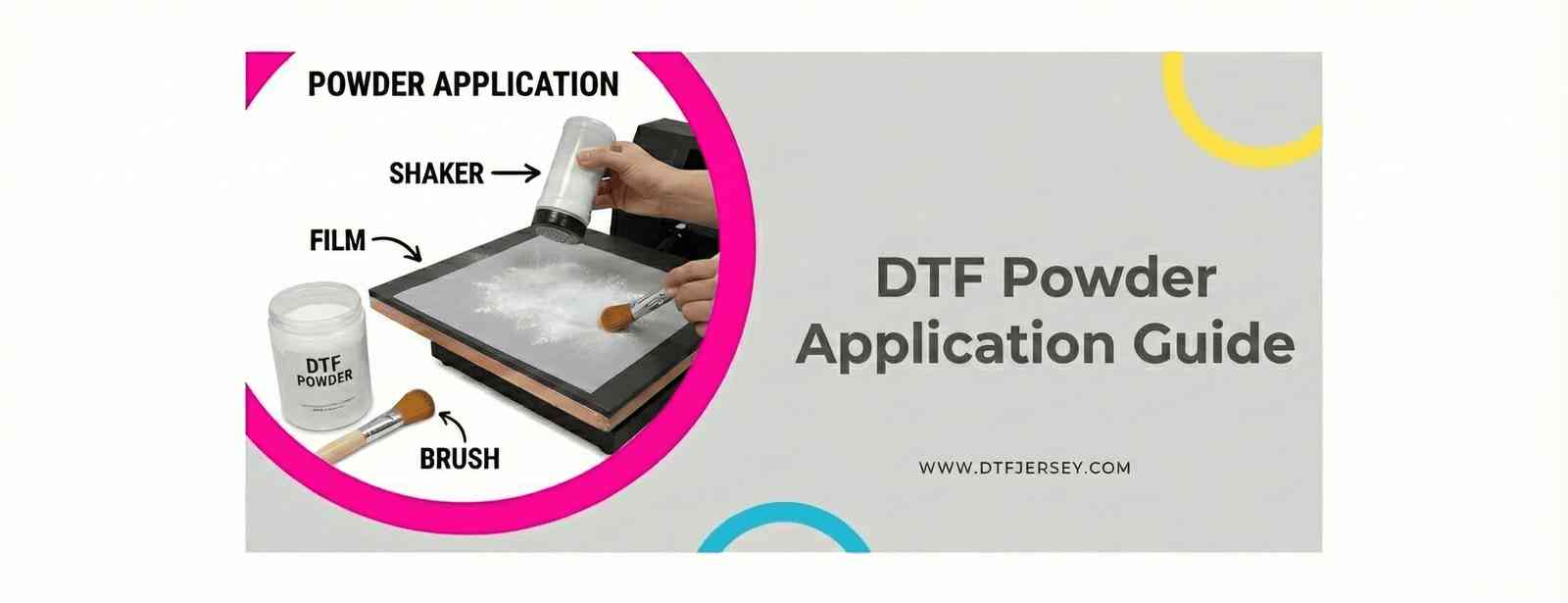
Manual Shaking Technique (Low Volume)
For hobbyists or businesses with low order volume, manual application is feasible, provided you focus on consistency:
- Preparation: Lay the freshly printed film flat immediately after printing. The white ink layer must still be wet.
- Pouring: Gently pour an excess amount of powder over the entire printed area.
- Distribution: Lift the film and gently rock or shake it, allowing the powder to coat the wet ink. Avoid scrubbing the surface.
- Tapping: Hold the film vertically and tap the back edge firmly against a hard surface to knock off all excess, non-adhering powder.
Automatic Shaker Systems (High Volume)
Commercial operations utilize automatic powder shaker machines, which drastically increase efficiency and consistency:
- Benefits: These systems apply the powder, remove the excess via vibration and vacuum, and often feed the film directly into an integrated curing tunnel, all in one pass.
- Consistency: Automatic shakers ensure uniform coverage, resulting in a cleaner final product and less adhesive waste.
1 lb DTF Powder Coverage Calculator
DTF powder usage is measured by weight consumed per square unit of film printed. A typical consumption rate, assuming proper shaking and recovery, is between 8 to 10 grams of adhesive powder per square meter of film printed.
DTF Powder Coverage Estimation Guide
| Powder Weight | Total Film Coverage (Estimated Sq Feet) | Total Film Coverage (Estimated Sq Meters) |
| 1 lb (453 grams) | 45 - 56 sq ft | 4.5 - 5.6 sq meters |
| 1 kg (1000 grams) | 100 - 120 sq ft | 10 - 12 sq meters |
| 2 kg (4.4 lbs) | 200 - 240 sq ft | 20 - 24 sq meters |
Using This Data: If you use 18-inch (0.45m) wide DTF film, 1 lb of powder will cover approximately 100 to 125 linear feet of film. This estimation helps you calculate your cost per transfer.
Common Powder Application Mistakes
Mistakes in the powder phase compromise the final quality and durability of the transfer, often leading to customer complaints.
- 1. Over-Powdering (The "Crust"): Applying too much powder results in the transfer having a thick, heavy, plastic-like "hand-feel" or crust, reducing the print's flexibility and comfort. Solution: Tap the film harder to remove excess powder.
- 2. Uneven Coverage ("Bald Spots"): If the adhesive is not evenly distributed, the cured film will have spots where the TPU failed to bond. When pressed, these "bald spots" will not adhere to the fabric, causing the transfer to peel prematurely. Solution: Ensure the ink is fully wet before application and use a dedicated shaking motion to cover the entire printed area.
- 3. Improper Curing: The powder must completely transition from a matte, grainy texture to a glossy, smooth finish. If it is under-cured, the adhesive remains brittle and washes off quickly. Proper curing is the final step in producing a highly durable transfer.
Storage & Handling Best Practices
DTF powder is highly sensitive to moisture and contamination. Proper storage is crucial for maintaining its efficacy and preventing clumping.
- Moisture is the Enemy: TPU powder is highly hygroscopic (absorbs moisture from the air). Once wet, the powder can clump, leading to uneven application and poor adhesion during curing. Always store unused powder in an airtight container or sealed bag.
- Temperature Control: Store the powder in a cool, dry place away from direct sunlight. Excessive heat can cause the powder to partially melt or clump together prematurely.
- Contamination: Ensure you avoid introducing foreign materials (dust, lint, or ink residue) into your main powder container. Use a dedicated scooping tool and clean your shaking surface regularly.
Mastering DTF powder application is a necessary skill for achieving truly professional, durable results. By understanding the types of powders, implementing proper dtf powder application techniques, and following strict storage protocols, you eliminate the major risks of poor adhesion and rigid prints.
Whether you rely on manual shaking or an automatic system, consistency is key. Proper coverage ensures maximum durability and a soft hand-feel, reinforcing the quality of the apparel you produce.
Need high-quality DTF transfers that minimize your material waste? Order your custom transfers today. We handle the printing, powder application, and perfect curing, ensuring you receive a flawless, ready-to-press transfer every time.