UV DTF for Phone Cases + Tumblers: What Sticks vs What Fails on Hard Surfaces
UV DTF transfers are the highest-growth product category in DTF printing for 2026. They open hard-surface applications that standard DTF cannot serve: ceramic mugs, tumblers, phone cases, glass cups, leather, metal, hard plastic. No heat press required. Apply with hand pressure, peel the carrier film, and the design is bonded to the surface.
But UV DTF adhesion is not universal. Different surface materials hold UV DTF differently. The transfer that survives 200 dishwasher cycles on a stainless tumbler will peel off a soft TPU phone case within two weeks of normal handling. The customer who buys a UV DTF wine glass and runs it through a dishwasher will see different results than the customer who hand-washes the same glass.
This is the working surface-by-surface UV DTF adhesion guide for the most common application categories.
Stainless Steel Tumblers: The Best-Case Surface
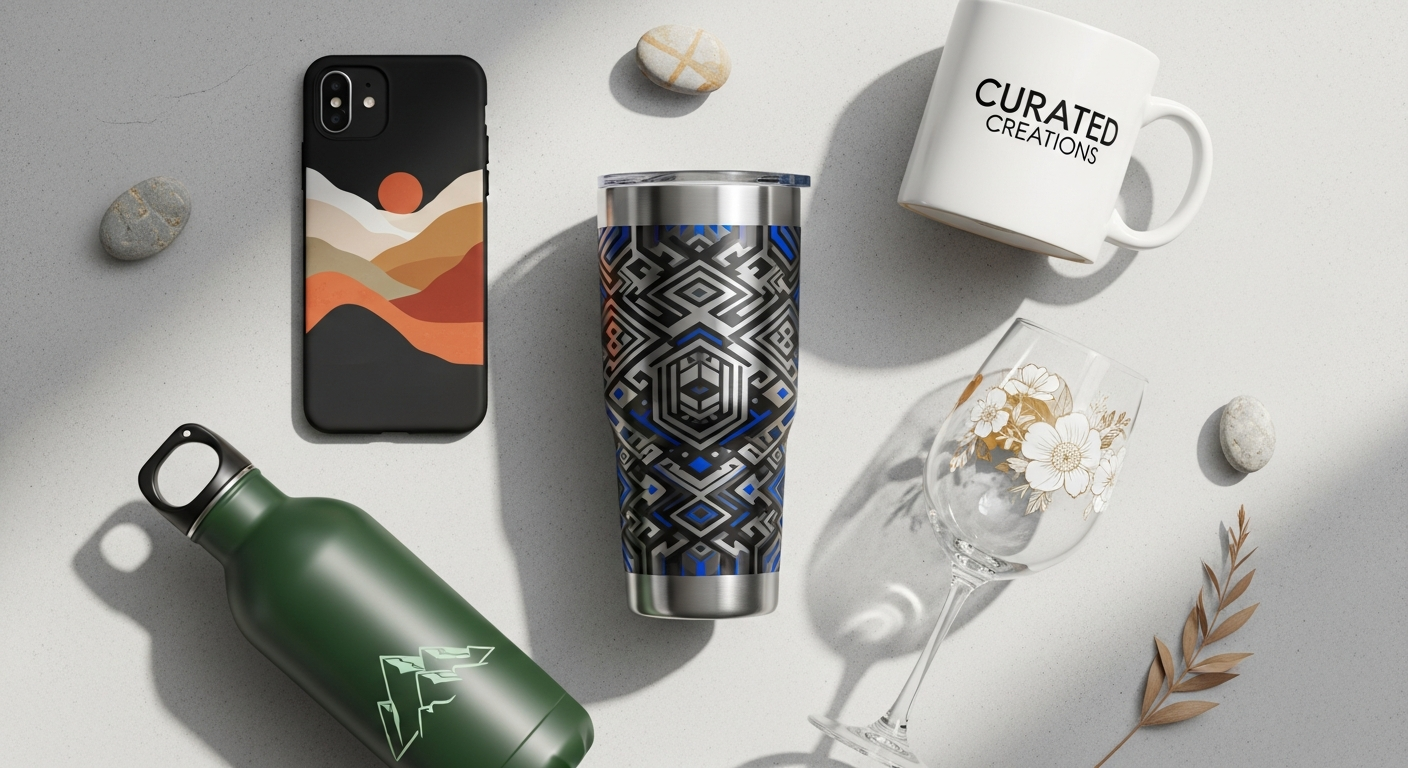
Stainless steel insulated tumblers (the 20oz, 30oz, and 40oz market that has dominated drinkware since 2022) are the strongest-adhesion surface for UV DTF transfers. The powder-coated outer finish on most brand-quality stainless tumblers provides an optimal bond surface for UV DTF.
The expected durability:
-
Hand-washing: indefinite (no observable degradation across normal use)
-
Dishwasher use: significant cycles before any edge-lift becomes visible
-
Daily handling and bag-toss: minimal abrasion impact
-
Direct sun exposure on a tumbler left in a car all day: minor color fade across multiple seasons, but the bond holds
For sellers running UV DTF transfers from DTF Jersey for stainless tumbler customization, this is the easiest application category. The bond is reliable. The customer experience is strong. Returns are minimal.
Ceramic Mugs: Strong Adhesion, Wash Sensitivity
Ceramic mugs are the second-strongest UV DTF surface, but with one important caveat: the dishwasher question.
Hand-washed ceramic mugs hold UV DTF transfers indefinitely. The bond is essentially permanent under normal kitchen-counter use, gentle hand-washing, and microwave reheating cycles.
Dishwashered ceramic mugs are where the variability appears. Repeated high-heat dishwasher cycles with harsh detergent can begin to soften the UV DTF adhesive over time. Some customers report no observable degradation across years of dishwasher use; other customers report visible edge-lift after a similar period. The variable seems to be detergent chemistry and dishwasher cycle temperature.
The seller's protective move: include a small care card with every ceramic mug order recommending hand-washing or top-rack dishwasher placement. The recommendation costs nothing and dramatically reduces post-purchase complaints.
Glass Tumblers and Wine Glasses: Strong Adhesion, Application Care Required
Smooth-glass surfaces (16oz Libbey glasses, wine glasses, mason jars) bond well with UV DTF transfers when the application is done correctly. The key variable is surface preparation: the glass must be completely free of fingerprint oils, manufacturing residue, or moisture at the moment of application.
The application protocol that works for glass:
-
Clean the glass surface with isopropyl alcohol immediately before applying the transfer
-
Let the alcohol fully evaporate before peeling the transfer's carrier film
-
Apply the transfer with even hand pressure across the entire design surface
-
Burnish the transfer edges with a small squeegee or credit card
-
Wait 24 hours before any water contact
For sellers running glass-tumbler customization through DTF Jersey UV DTF transfers, the application care card included with the order should specify the cleaning step. Customers who apply the transfer to a fingerprint-smudged glass surface will see early peel; customers who apply correctly see permanent adhesion.
Phone Cases: The Most Variable Surface
Phone cases are where UV DTF adhesion gets complicated. Different case materials hold UV DTF differently. The same transfer applied to two different phone-case materials can show very different long-term durability.
Hard Polycarbonate Cases (Strong Adhesion)
Hard plastic shell cases (the smooth-finished, snap-on polycarbonate cases sold as "blank for sublimation" or "blank for vinyl") hold UV DTF transfers reliably. The smooth hard surface provides optimal bond conditions.
Soft TPU Cases (Weak Adhesion, Frequent Failure)
Flexible silicone-feel TPU cases (the soft, squeezable cases marketed as "shockproof" or "grippy") are a problem surface for UV DTF. The TPU material flexes with daily handling, and the constant micro-deformation breaks the UV DTF adhesive bond over time. Customers report visible edge-lift within 2-4 weeks of normal use.
The seller's protective move: list UV DTF phone-case products only on hard polycarbonate blanks, not on soft TPU blanks. Specify the case material in the listing copy to manage customer expectation.
Matte-Finish Cases (Variable Adhesion)
Cases with matte texture or rubberized soft-touch coatings sit in the middle of the adhesion spectrum. The matte surface holds UV DTF better than soft TPU but worse than smooth hard plastic. Bond durability runs 6-18 months on average use, after which edge-lift can appear.
Powder-Coated Metal: Strong Adhesion
Powder-coated metal surfaces (water bottles, drink koozies, metal phone-grip accessories, license plates) hold UV DTF transfers exceptionally well. The powder coating provides a chemically compatible bond surface, and the rigid metal substrate does not flex under handling.
For sellers expanding into metal-water-bottle and koozie customization, this is a low-risk application category. The customer satisfaction tends to be high.
Leather and Faux Leather: Variable, Application-Dependent
Real leather and high-quality faux leather (vegan leather, PU leather) can hold UV DTF transfers under certain conditions, but the application is more sensitive than other surfaces.
The protocol for leather UV DTF:
-
Test the specific leather sample before committing to a customer order
-
Avoid heavily textured or oiled leathers (these reject the adhesive)
-
Apply with significant pressure and let the bond cure undisturbed for 48 hours
-
Recommend the customer avoid direct sun exposure for the first 30 days
For sellers running custom leather products (wallets, journal covers, leather phone wallets), the UV DTF application can work but requires per-product testing.
What to Avoid
Some surfaces categorically reject UV DTF transfers. Save the seller and the customer the disappointment:
-
Untreated raw wood (the wood absorbs the carrier residue, leaving a hazy outline)
-
Heavily textured fabrics (UV DTF is for hard surfaces; use heat-press DTF for fabric)
-
Surfaces with existing print or coating that may interact with the UV DTF adhesive (test first)
-
Greasy or oily surfaces that have not been thoroughly cleaned (the adhesive cannot bond)
The Adhesion-Test Workflow
For sellers expanding into a new UV DTF product category, the adhesion test is a one-time investment that prevents customer-service issues for the next thousand orders.
The protocol:
-
Order a small batch of UV DTF transfers for the test design from DTF Jersey
-
Apply to 4-6 sample units of the target surface
-
Subject the samples to the expected use environment (kitchen washing for drinkware, daily handling for phone cases, etc.)
-
Track edge-lift, fade, or peel across 30 days
-
Decide whether the surface category is worth listing on Etsy or Amazon
The shops that build a UV DTF product catalog on solid adhesion data are the ones that build sustainable Etsy ratings. The shops that list every surface category without testing are the ones whose first 30 days of customer reviews wreck their search ranking for the next year.
For sellers running UV DTF transfers through DTF Jersey, the UV DTF transfer collection handles the production side. The application discipline is what determines whether the customer experience makes the product profitable.
UV DTF is the highest-growth category in DTF printing for 2026. The shops that win it are the ones that respect the surface-by-surface adhesion reality.