The Free Heat-Press Service Explained: DTF Jersey's Edge
Not every custom apparel seller wants to own a heat press. Some are testing a new design before they commit to equipment. Others run a small operation out of a spare room and would rather hand the pressing step to someone else. A few simply have a rush order and no time to babysit a platen.
That is the gap DTF Jersey's free heat-press service is built to close. Instead of shipping you loose transfers to press yourself, DTF Jersey can apply the design to your garment, so what arrives is closer to ready-to-sell. This post explains how that service fits into a seller's workflow, who benefits most, and what to weigh before you choose it.
- What the Free Heat-Press Service Actually Does
- Who Tends to Benefit Most
- How It Fits Into a Typical Seller Workflow
- Pickup and Shipping: Keep Them Separate
- A Note on the Press Settings Themselves
- Troubleshooting: When a Pressed Result Looks Off
- Care and Handling Once It Is Pressed
- The Bottom Line for Local Sellers
- Frequently Asked Questions
What the Free Heat-Press Service Actually Does
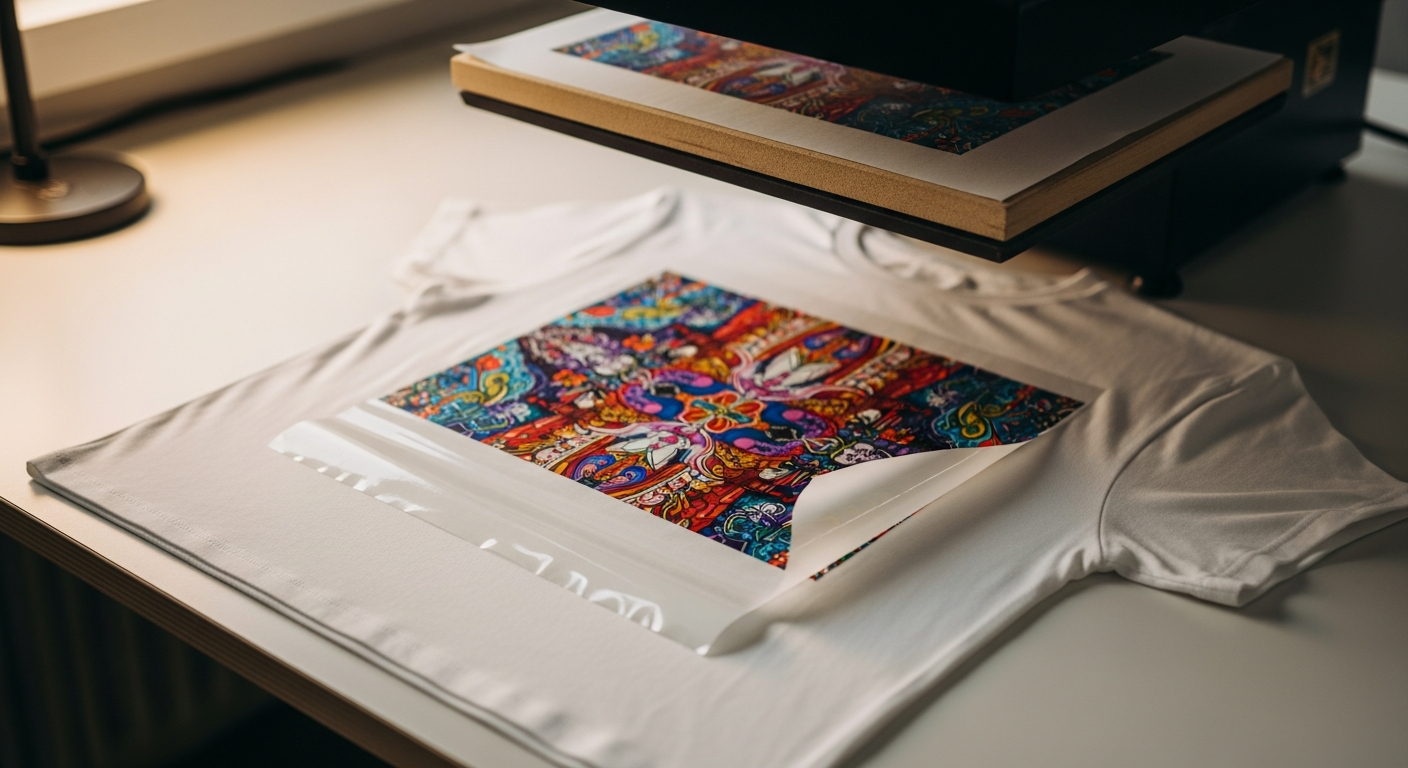
At its core, the service removes a step from your hands. A standard DTF order ships as a printed transfer on carrier film, and the application happens on your side: line it up, press, peel, and finish. The free heat-press option shifts that step to the DTF Jersey side.
- Order the transfer
- Stage the blanks
- Press each garment
- Peel & inspect
- Fold and pack
- Order the transfer + garment
- DTF Jersey presses for you
- Inspect on arrival
- Fold and pack
- Ship to your customer
For a seller, that often means the difference between receiving "a transfer plus a blank" and receiving "a finished garment." The practical value is less about any single shirt and more about the workflow. When you remove the press step, you also remove the equipment, the bench space, the learning curve, and the time it takes to dial in a press for a fabric you may not have run before.
Who Tends to Benefit Most
The free heat-press service is not for everyone. It tends to make the most sense for a few specific seller profiles.
If you already own a reliable press, run consistent fabrics, and have the time, pressing in-house may still be the better fit. The service is a tool, not a verdict on how you should operate.
How It Fits Into a Typical Seller Workflow
Picture a small custom apparel seller in the New Jersey or New York metro handling a modest order of front-chest prints. The usual path looks like this: order the transfers, receive them, stage the blanks, press each one, peel, inspect, fold, and pack.
With the free heat-press service, several of those middle steps may collapse. You still handle design, ordering, inspection on arrival, and fulfillment, but the press-and-peel stage can sit on the DTF Jersey side. For a seller juggling other parts of a business, that recovered time can matter more than any single line item.
This pairs naturally with custom DTF transfers ordered by size, and it can complement bulk work built on gang sheets when you need many designs at once. The right combination depends on your order mix.
Pickup and Shipping: Keep Them Separate
Logistics are where sellers most often trip up, so it helps to treat pickup and shipping as two distinct paths.
If your job involves the heat-press service, factor application time into whichever path you choose. All times referenced here are Eastern (ET), matching the Elmwood Park facility.
A Note on the Press Settings Themselves
Even when DTF Jersey presses for you, it helps to understand the application so you know what a good result should look like. For sellers who press in-house, DTF Jersey's client-confirmed guidance is a useful reference, and you should still follow the instructions supplied with your transfer.
🔥 DTF Jersey Press Specs (General Guidance)
These are starting points, not absolutes. Settings may need testing on unfamiliar fabrics, blends, or specialty garments. For a fuller walkthrough, see DTF Jersey's DTF pressing instructions guide.
Troubleshooting: When a Pressed Result Looks Off
If a finished garment does not look right, resist blaming a single cause. Application issues usually have several possible explanations, and working through them in order saves wasted blanks.
When the heat-press service handles application for you, many of these variables move off your plate. If you ever receive an order with an issue, contact DTF Jersey and they will work to make it right.
Care and Handling Once It Is Pressed
A pressed garment still needs sensible aftercare, whether you press it or DTF Jersey does. Good handling protects both the print and your reputation with the customer.
DTF Jersey's transfers have been Intertek-tested for durability across more than 100 wash cycles with no major cracking, peeling, or color fading, which is a meaningful third-party signal. Results in the real world still depend on application and care, so it is worth sharing simple care guidance with your own customers. For more detail, the care and durability guide covers this in depth.
The Bottom Line for Local Sellers
The free heat-press service is best understood as a workflow advantage, not a gimmick. By shifting the press step off your plate, it lets you spend that time on designs, customers, and growth instead. For new sellers, tight spaces, and deadline-driven jobs, that tradeoff often lands in the seller's favor.
If you think the service fits your operation, the next step is simple: confirm the current scope and timing with DTF Jersey, line up your design files, and decide between local pickup in Elmwood Park or shipping at checkout. From there, you can focus on selling instead of pressing.
Skip the Press, Ship Finished Garments
Let DTF Jersey handle the pressing. You handle the design and the customer. Confirm scope with the team, then choose local pickup or shipping at checkout.
Order DTF Transfers → Contact DTF JerseyFrequently Asked Questions
Does using the free heat-press service mean I never need my own heat press?
Not necessarily. The DTF Jersey heat-press service can remove the press step for the orders you choose to send through it, but many sellers still keep a press for reorders, touch-ups, or jobs they handle in-house. Whether you need one depends on your volume and workflow.
Can I send my own blank garments to be pressed, or do they have to be ordered together?
Scope details like this can vary, so confirm directly with DTF Jersey before planning around it. Treat the service terms as something to verify per order rather than assume.
Does adding the heat-press service change how long a rush job takes?
Application is an extra step, so it can add handling time on top of printing. If you are working against a tight deadline, confirm the realistic timing with DTF Jersey before you commit, rather than assuming a pressed order moves on the same clock as a loose transfer.
What condition does a pressed garment arrive in, and can I sell it as is?
The goal of the DTF Jersey heat-press service is a garment that is closer to ready-to-sell, with the design already applied and the carrier film removed. Always inspect each piece on arrival before listing or shipping it to your own customer, since you still own quality control and final fulfillment.
Is the free heat-press service available for UV DTF orders?
UV DTF is a different product applied by hand pressure to hard surfaces with no heat press, so the heat-press step does not apply to it. The service is relevant to standard DTF transfers on fabric; confirm any specifics with DTF Jersey.