DTF Transfer Sheets: Sizes, Specs & What to Expect When You Order
DTF transfer sheets are the physical product you receive when you order a custom DTF transfer. Understanding what a sheet is, how sizing affects cost, and what quality indicators to check before pressing makes a meaningful difference in your results, especially when you are ordering from a new supplier for the first time.
This guide covers sheet formats, standard sizes, the difference between a single transfer and a gang sheet, and what to look for before the heat press.
- What Is a DTF Transfer Sheet?
- How Sheet Sizes Work: Width, Length, and Standard Formats
- Gang Sheets vs Single Transfer Sheets
- What to Check When Your Sheets Arrive
- File Specs for Submitting Sheet Layouts
- Cost Per Transfer: How Sheet Format Affects Pricing
- Ordering DTF Transfer Sheets at DTF Jersey
- Frequently Asked Questions
What Is a DTF Transfer Sheet?
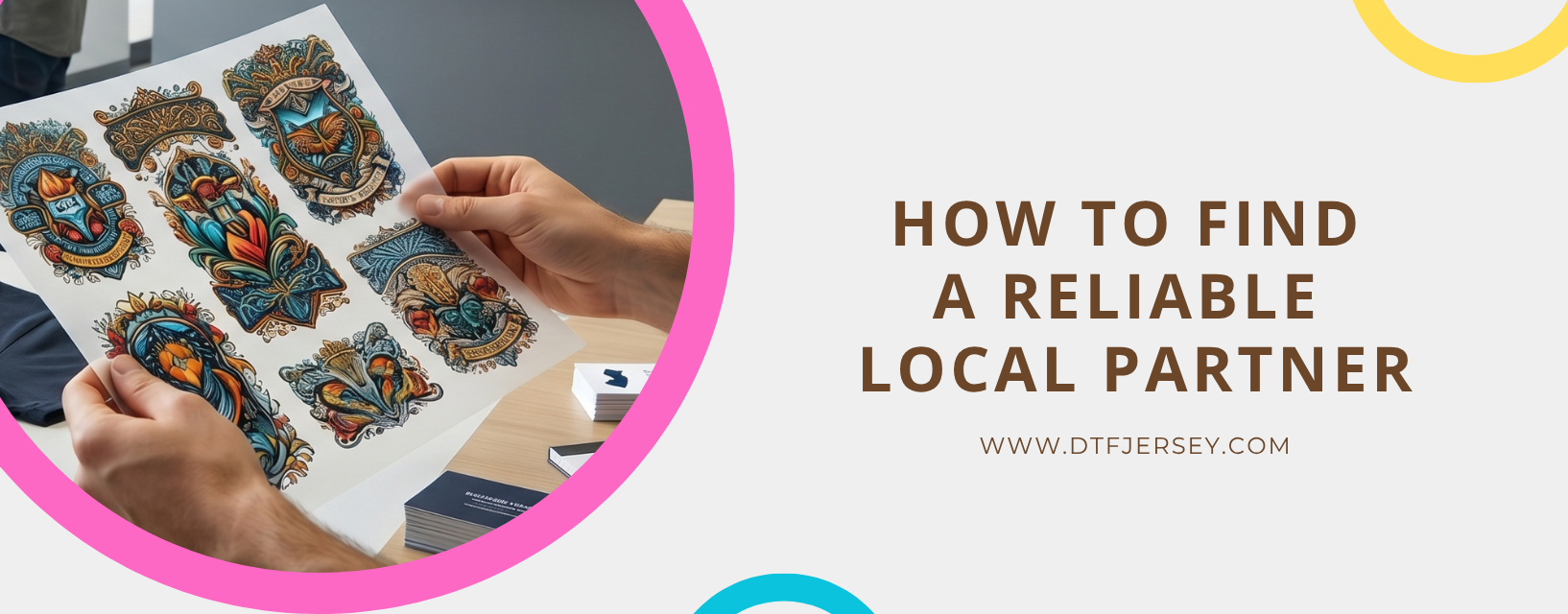
A DTF transfer sheet is a piece of polyester film with a printed design on it, ready to be applied to a garment using a heat press. The film holds the ink layer and adhesive powder that bond to the fabric during pressing.
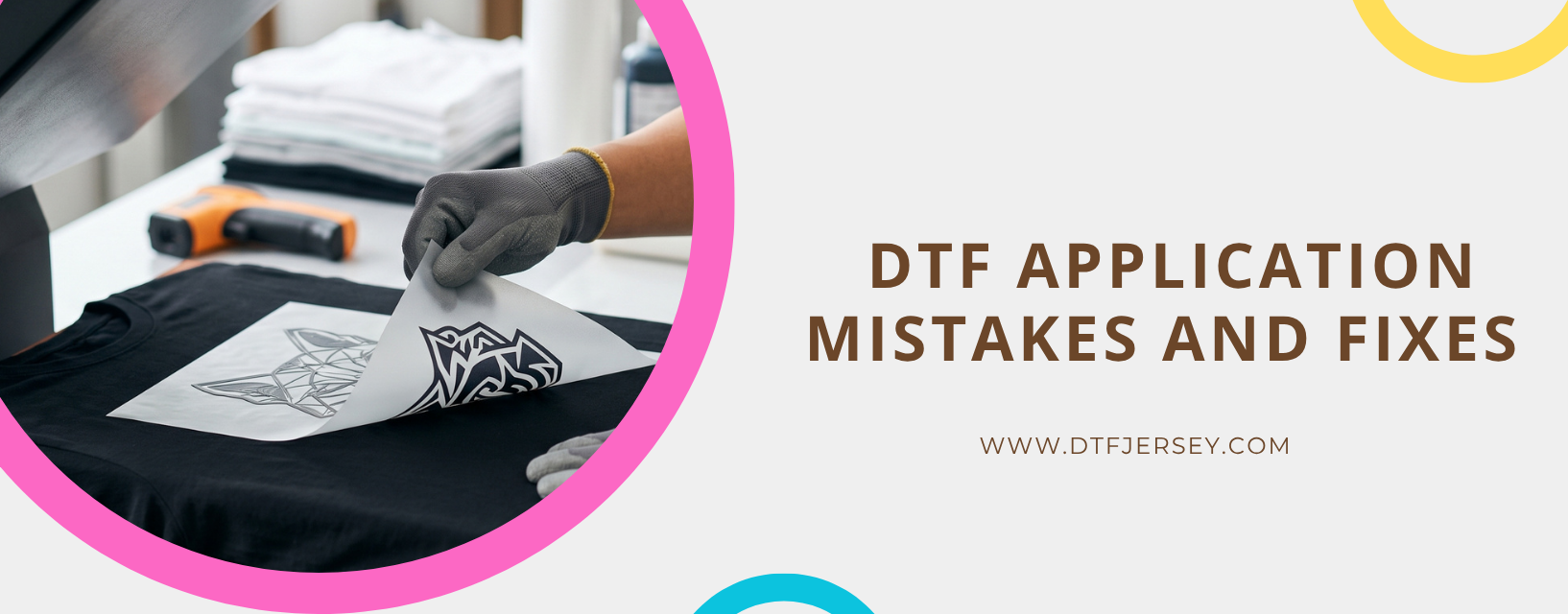
When a transfer sheet arrives, you are looking at a thin, flexible piece of film. The design is visible on the top surface. The back side has the adhesive powder layer that activates under heat. A release film or backing protects the adhesive side during shipping and is removed during the peel step after pressing.
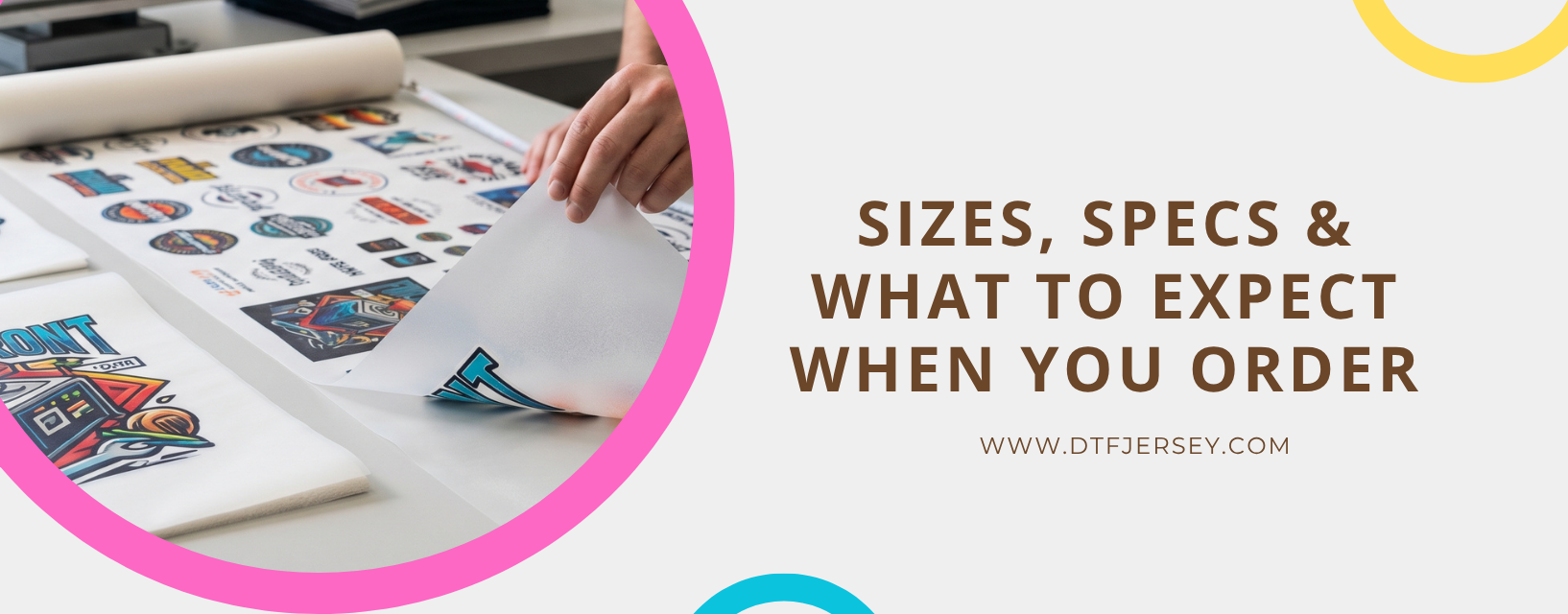
The term "sheet" is used broadly in the DTF industry to refer to both individual transfers sized to a specific design and gang sheets that hold multiple designs on a single larger piece of film. Understanding which format you are ordering matters for pricing, file preparation, and how you use the product at the press.
DTF transfer sheets are distinct from heat transfer paper, which is a different product using a different process. DTF uses a printed film with a separate adhesive powder layer. The result on the garment is different in feel, stretch performance, and durability.
How Sheet Sizes Work: Width, Length, and Standard Formats
DTF transfer sheets have two primary format types: individual transfer sheets sized to the design, and gang sheets in a standard production width.
Individual transfer sheets are sized to match the design. A left-chest print that is 4 inches wide and 4 inches tall produces a 4×4 inch transfer sheet. A full-front graphic that is 12 inches wide and 14 inches tall produces a 12×14 inch sheet. You order the dimensions that match what you want to press onto the garment.
Gang sheets use a standard production width of 22 inches. The height is variable depending on how many designs you are combining and how they are arranged. A 22×12 inch sheet and a 22×24 inch sheet both use the same 22-inch standard width. The length increases as you add more designs to the layout.
The 22-inch width is a function of the production equipment, not an arbitrary choice. DTF printers in commercial production run at specific roll widths, and 22 inches is the standard for most mid-volume production setups. Designing your layouts around this width ensures your files fit the print format without cropping or scaling.
For a detailed breakdown of file preparation including dimensions for common garment positions (left chest, full front, full back, sleeve, hat prints), see DTF Jersey's DTF Print Files guide.
Gang Sheets vs Single Transfer Sheets
Individual transfer sheets and gang sheets serve different purposes in a production workflow. Choosing the right format depends on your order volume and design variety.
- Sized to match the design exactly
- Ideal for a single custom piece or replacement order
- Perfect for testing a new design before committing to bulk
- Order one, press, evaluate, then scale
- Standard 22-inch production width, variable height
- Multiple designs packed on one sheet
- Lower cost per transfer when packed efficiently
- Ideal for multi-design orders or repeat artwork
The break-even point between formats depends on the specific designs and quantities, but the general principle is clear: if you have three or more designs going into production simultaneously, a gang sheet is often the lower cost option.
For more on gang sheet structure including how sections work, cost-per-transfer math, and how to organize a multi-design order, see DTF Jersey's What Is a DTF Gang Sheet? guide.
What to Check When Your Sheets Arrive
Before pressing any transfer sheets, spend a minute evaluating what arrived. Catching a quality issue before pressing is much easier than dealing with it after.
If any of these checks reveal a quality issue, contact your supplier before pressing. Pressing a defective transfer onto a finished garment creates a more expensive problem.
File Specs for Submitting Sheet Layouts
Submitting a clean file is what ensures the printed sheet matches what you designed. The technical requirements for DTF transfer sheets:
📐 DTF Jersey File Requirements
For the complete file preparation process including software-specific settings for Canva, Photoshop, and Illustrator, see DTF Jersey's DTF Print Files guide.
Cost Per Transfer: How Sheet Format Affects Pricing
At DTF Jersey, gang sheets are priced per section, with each section roughly 11×11 inches of the 22-inch sheet. Individual transfers are priced by size. Check current pricing on the product pages for up-to-date rates.
The cost difference between formats depends entirely on how densely you pack the gang sheet:
Dense sheet packing is the mechanism that produces the lowest cost per transfer. Designs that are smaller relative to the sheet section allow more designs per section, which distributes the fixed section cost across more transfers.
For decorators new to gang sheet ordering, the DTF Gang Sheets guide walks through layout strategy for getting the most transfers per section at the lowest cost per print.
Ordering DTF Transfer Sheets at DTF Jersey
DTF Jersey produces custom transfer sheets with same-day ship on orders placed before 3:00 PM ET. NJ addresses receive the order next morning. No minimums, no setup fees.
Three ordering options for transfer sheets:
For NJ buyers who need same-day pickup, place the order online and contact DTF Jersey to arrange collection timing.
Ready to Order Transfer Sheets?
Same-day ship before 3:00 PM ET. No minimums, no setup fees. Choose the format that fits your job.
Order by Size → Build a Gang SheetFrequently Asked Questions
What is a DTF transfer sheet?
A DTF transfer sheet is a piece of polyester film with a printed design and adhesive powder layer, ready to be heat-pressed onto a garment. It includes three working layers: the printed ink design on top, a white underbase that makes colors vibrant, and the hot-melt adhesive powder on the back that bonds to fabric under heat.
What is the difference between a single transfer sheet and a gang sheet?
An individual transfer sheet is sized to match a single design exactly. A gang sheet uses a standard 22-inch production width with variable height and packs multiple designs onto one sheet. Single transfers are best for one-off custom pieces or design testing. Gang sheets are often more cost-efficient when you have three or more designs in production at the same time.
What file format should I submit for DTF transfer sheets?
Transparent PNG at 300 DPI minimum, sized at the final print dimensions. JPEG files do not support transparency, so any background may print as part of the design. RGB color mode is generally fine — DTF Jersey's RIP handles the conversion. See the DTF Print Files guide for software-specific export settings.
What should I check when my DTF transfer sheets arrive?
Four things before pressing: white ink coverage on the back (should be dense and opaque), adhesive evenness across the surface (consistent powder coating), edge definition on fine details (sharp lines, no bleed), and physical condition (flat or loosely rolled, no creases crossing the design area). If any of these reveal an issue, contact your supplier before pressing.
How much do DTF transfer sheets cost?
Pricing depends on format. Individual transfers are priced by size, while gang sheets are priced per section. The cost per transfer drops significantly when you pack a gang sheet section densely with multiple smaller designs versus filling it with one large design. Check the current rates on the Custom DTF Transfers by Size and DTF Gang Sheet Builder product pages.