
What is DTF Printing? The Definitive Guide for Entrepreneurs and Textile Professionals
The custom apparel and textile personalization industry is undergoing rapid and constant evolution. While screen printing dominated the market for decades, followed by sublimation and, more recently, Direct-to-Garment (DTG) printing, the current focus has shifted to a technology that combines the versatility of digital printing with the durability of transfers: Direct-to-Film (DTF) printing.
DTF is not just another option; it represents a hybrid solution designed to mitigate the main limitations of its predecessors. By printing the design onto a special film (PET), applying a thermoplastic adhesive powder, and then transferring the assembly to the fabric using heat, DTF bypasses the need for complex pre-treatment (as in DTG) and high setup costs (as in screen printing).
This technology has democratized access to high-quality color printing, allowing small and medium-sized businesses to offer a range of products and designs that were previously economically unfeasible.
In this complete guide, we will explore the process, the necessary equipment, the competitive advantages, and, critically, the cost and maintenance details that define success for a DTF-based business.
What is Direct-to-Film (DTF) Printing?
Direct-to-Film (DTF) printing is an innovative heat transfer technology that allows businesses to produce durable, full-color designs for nearly any type of textile. It acts as a specialized hybrid between digital printing and traditional transfer methods.
Unlike Direct-to-Garment (DTG) printing, which applies ink directly to fabric fibers, DTF strategically prints the design onto a thin Polyethylene Terephthalate (PET) film. This film serves as the carrier for the design. A thermoplastic adhesive powder is then applied and thermally fused to the ink layer, creating a peel-off decal ready for transfer.
For textile professionals, DTF technology is defined by its core technical output: a flexible, ink-and-adhesive layer that provides high-resolution imagery and unmatched durability, regardless of whether the final garment is cotton, polyester, or a synthetic blend. This eliminates the need for fabric pre-treatment, simplifying the production workflow.
How does DTF printing work?
The DTF production cycle is relatively simple in its logic but highly dependent on the calibration and quality of the consumables. The process is divided into four fundamental stages: Printing, Adhesive Application, Curing, and Transfer.
Digital Printing (Ink and Film)
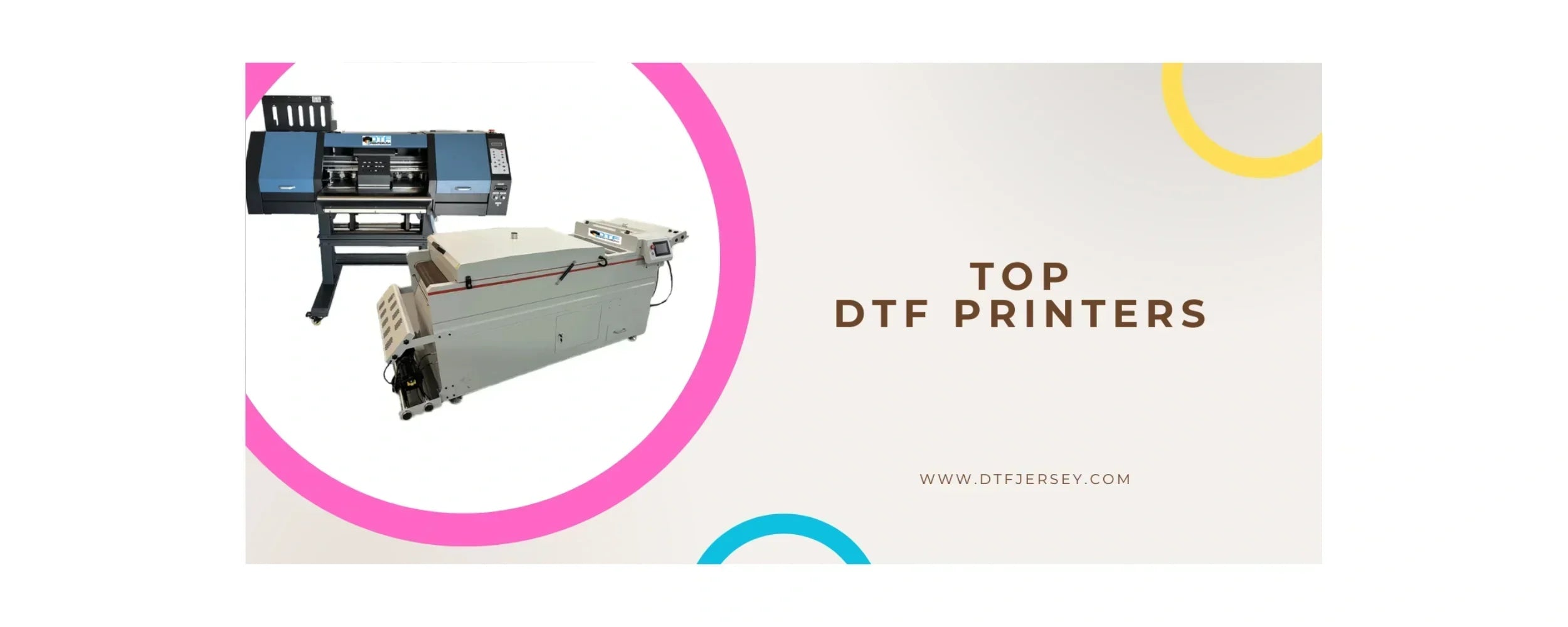
The heart of the process is the DTF printer. Unlike conventional printers, it is equipped with a specific ink system and, crucially, utilizes white ink as a base layer.
-
Color Printing: The design is first printed onto the PET film (typically between 0.75 mm and 1.5 mm thick) using CMYK inks (Cyan, Magenta, Yellow, and Black).
-
White Layer Printing (Underbase): Immediately following the color layer, the printer deposits a thick layer of white ink over the colored design. This white layer serves two essential functions: a) to act as an opaque base so the colors pop (stand out) on dark fabrics; and b) to act as the "cement" that will adhere to the adhesive powder.
Adhesive Powder Application (Polyamide)
As the film exits the printer, and before the ink dries, it passes through a powder application station (in industrial systems, this is an automatic shaker; in desktop systems, it may be manual).
-
Composition: The adhesive powder is a thermoplastic polymer, usually made of polyurethane or polyamide. It is responsible for the print's adhesion and the final hand-feel.
-
Function: The powder adheres strictly to the wet ink (mainly the white layer), and the excess is removed by shaking, leaving only the design ready for the next phase.
Curing (The Fusion Process)
Curing is the stage where the adhesive powder, when heated, melts and fuses with the wet ink, forming a single, solid, and transferable layer.
-
Equipment: In industrial settings, an oven or a curing tunnel is coupled with the shaker. In smaller setups, a heat press (using the hover method) or a curing oven may be used.
-
Temperature and Time: Time and temperature specifications are vital and vary according to the powder and film but are generally around 160°C to 170°C (320°F to 338°F) for 90 to 120 seconds. Incomplete curing results in adhesion failures and low durability.
Transfer to the Fabric (Heat Press)
The final step is applying the cured transfer to the textile substrate.
-
Positioning: The film, now with the dry design and fused adhesive, is positioned on the garment.
-
Pressing: The heat press applies heat (typically 140°C to 165°C / 284°F to 329°F) and pressure (medium to high) for a short period (10 to 20 seconds). The heat reactivates the thermoplastic adhesive, forcing it to bond with the fabric fibers.
-
Film Removal (The Peel): Depending on the film type (Hot Peel, Cold Peel, or Warm Peel), the PET film is removed immediately or after cooling, leaving only the printed design on the piece.
Competitive Advantages and DTF Versatility
DTF’s rise is credited to its ability to overcome the main bottlenecks of other established techniques.
| Competitive Advantage | Technical Detail |
|---|---|
| Fabric Versatility | Prints on 100% cotton, polyester, nylon, blends, silk, and leather. Does not require a high cotton content like DTG. |
| Vibrant Colors on Dark Fabrics | The white ink layer serves as an opaque, bright substrate, ensuring CMYK colors retain 100% of their saturation and vibrancy, regardless of the garment's background color. |
| Elimination of Pre-Treatment | Unlike DTG, which requires spraying a pre-treatment liquid on dark garments to prevent white ink from "sinking" into the fibers, DTF completely eliminates this step, saving time, cost, and simplifying the process. |
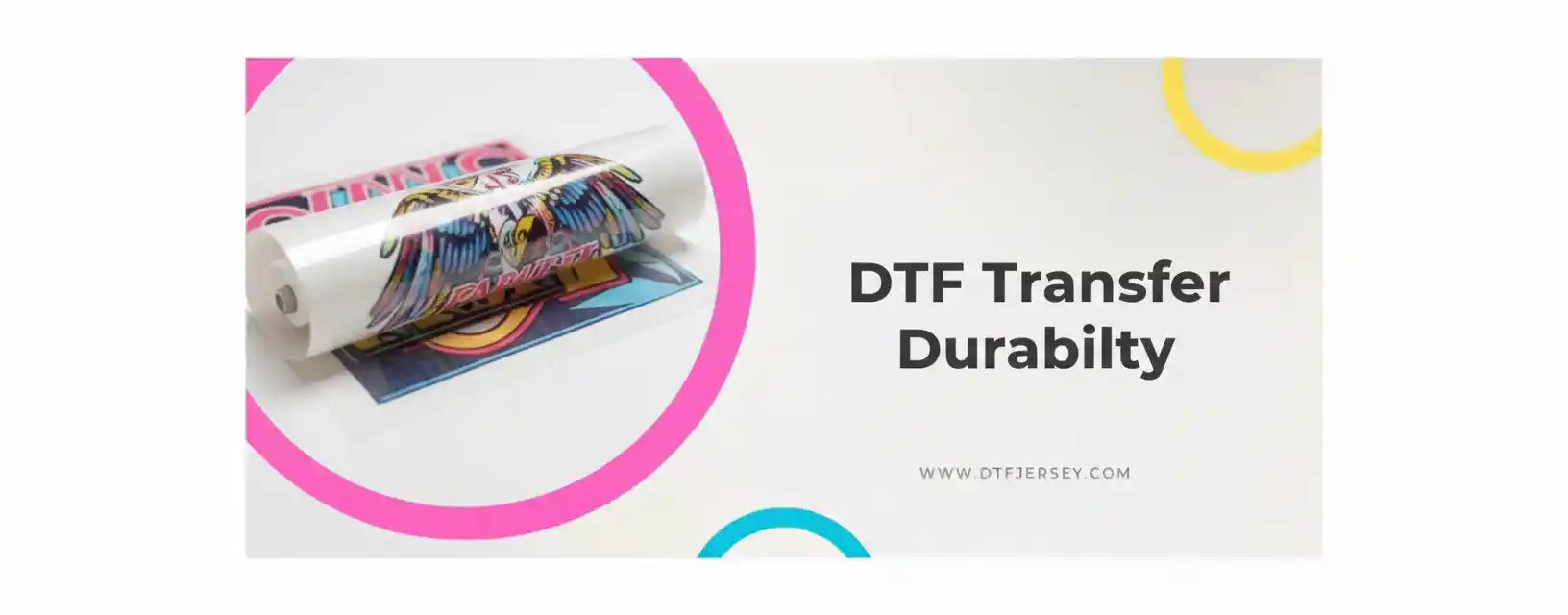
| Durability and Hand-Feel | The thermoplastic adhesive creates a robust bond, resulting in wash-resistant prints. The hand-feel is often lighter and more elastic than traditional, thick plastisol screen prints. |
| Batch Printing (Fast Production) | The ability to print film rolls (gang sheets) with multiple designs optimizes material use and allows for multiple designs to be transferred simultaneously, increasing productivity. |
DTF vs. Other Methods: Cost-Benefit and ROI Analysis
For any entrepreneur, the technology choice must be based on a Return on Investment (ROI) analysis, which is dictated by production volume, design type, and operational cost. We will compare DTF with its two main competitors: DTG and Screen Printing.
Screen Printing
| Factor | Screen Printing | DTF | ROI Winner |
|---|---|---|---|
| Initial Cost (Setup) | Low for equipment, but high in job setup (screens, film, emulsion, inventory). | Moderate to High (Printer, shaker, press). | DTF (Less overhead and space). |
| Cost per Piece (Batch of 500+) | Very low (Ink cost is minimal). | Low to Moderate (Cost of film, ink, and powder). | Screen Printing (For high volume and few colors). |
| Small Batch Viability | Unfeasible. Setup cost is the same for 1 or 100 pieces. | Completely viable. Unit cost is stable. | DTF (Maximum ROI in on-demand production). |
| Color/Design Versatility | Limited. Each color requires a screen and alignment (high cost for full-color). | Unlimited (Digital printing in CMYK + White). | DTF |
Conclusion on Screen Printing: Screen printing is the champion in durability and the lowest cost per piece in massive, single-color or few-color orders (above 500 or 1000 units). However, DTF maximizes ROI for the vast majority of modern business models, which rely on on-demand production, high design variety, and small-to-medium orders.
DTG Printing (Direct-to-Garment)
| Factor | DTG | DTF | ROI Winner |
|---|---|---|---|
| Initial Cost (Equipment) | High (Generally above 15,000 USD). | Moderate (Entry-level models from 4,000 USD). | DTF |
| Pre-Treatment | Mandatory for dark garments (additional liquid and labor cost). | Not required (The film acts as the "pre-treatment"). | DTF |
| Fabric Versatility | Ideal for 100% Cotton or high cotton content. | Works on any fabric (Polyester, Nylon, etc.). | DTF |
| Hand-Feel | Softer (Ink absorbed into the fiber). | Slightly more rigid (Thin transfer on the surface). | DTG |
| Production Speed | Slower (The process of printing on the fabric is deliberate). | Faster (Allows gang sheets and continuous film printing). | DTF |
Conclusion on DTG: DTG excels when hand-feel (the touch) is the absolute priority on light-colored 100% cotton pieces, as the ink penetrates the fibers. However, DTF is the clear winner in terms of ROI and operational efficiency, due to its lower initial investment, elimination of pre-treatment, and vast substrate versatility, which minimizes risks and expands the potential market for a small or medium-sized business.
Hypothetical Case Study and Break-Even Point
Let's consider a small business with an initial investment of 5,000 USD in a DTF system (printer, manual shaker/oven, and press).
| Calculation Detail | Unit Value |
|---|---|
| Consumable Cost per T-Shirt (Film, Ink, Powder) | 3.50 to 5.00 USD |
| Average Selling Price per Custom T-Shirt | 20.00 USD |
| Gross Profit Margin per T-Shirt | 15.00 to 16.50 USD |
| Units Needed to Cover 5,000 USD Investment | 303 to 333 T-Shirts |
Based on market data, a small store selling just 10 t-shirts per business day (200 t-shirts per month) can reach the break-even point in just 1 to 2 months.
This rapid investment recovery, coupled with the ability to accept any order (from a single piece for a birthday to 100 polyester uniforms), makes DTF one of the most profitable choices for textile entrepreneurship. DTF does not require large inventories of finished pieces, enabling an on-demand model that drastically reduces working capital "tied up" in merchandise.
Operational Challenges and the White Ink Factor
Despite its advantages, DTF presents specific operational challenges, the most crucial of which is related to white ink. The high cost of consumables and rigorous maintenance are the critical points that every operator must master.
Critical Maintenance: The Role of White Ink and the Circulation System
DTF white ink, essential for vibrant colors on dark fabrics, is formulated with titanium dioxide particles. This heavy pigment provides opacity but has a major drawback: sedimentation.
The Need for a Circulation System:
If the DTF printer is not used regularly, or if the white ink is not agitated, the titanium dioxide particles separate from the liquid vehicle and settle at the bottom of the cartridge and, more critically, in the ink lines and print heads. The result is nozzle clogging, leading to print failures, quality loss, and, in extreme cases, expensive, irreparable damage to the print head.
Daily and Environmental Routine:
-
Agitation and Circulation: Professional-grade DTF printers feature an Automatic Circulation System that keeps the white ink constantly moving, even when the machine is idle. If your model lacks this system, it is imperative that the operator manually shakes the white ink cartridges daily.
-
Nozzle Check: Must be performed at the start of every shift to ensure all nozzles (CMYK and White) are firing correctly.
-
Capping Station Cleaning: The capping station, where the print head "rests," needs to be cleaned daily. Ink buildup in this area prevents the print head from sealing correctly, causing drying and nozzle failure.
-
Environmental Requirements: The work environment directly influences the printer's health:
-
Temperature: Ideally, it should be maintained above 22°C (71°F). Lower temperatures reduce the ink's fluidity.
-
Humidity: The relative humidity level should be between 50% to 60%. A very dry environment accelerates the evaporation of ink solvents at the print head, increasing the risk of clogging. Using a humidifier is often necessary.
-
Scheduled Maintenance (Weekly/Monthly):
-
Wiper Blade Cleaning: The blades that clean the print head must be inspected and cleaned weekly.
-
Filter Replacement: White ink filters have a short lifespan and must be replaced every half-month to one month, depending on production volume, to ensure the ink's purity before it reaches the print head.
The Cost of Consumables and Pricing Structure
The high cost of supplies is the main disadvantage of DTF. The retail price of DTF transfers (or gang sheets) reflects the need to cover the elevated costs of the PET film, ink (especially white), and adhesive powder.
-
White Ink: Due to its titanium dioxide content, it is more expensive than colored inks.
-
Adhesive Powder: Although relatively inexpensive per kilogram, it is a DTF-exclusive consumable.
-
PET Film: The film is a fixed cost per printed area, unlike screen printing, where the printing substrate cost is zero after the screen setup.
A robust financial plan must incorporate these higher operational costs, offsetting them with the increased profit margin on low-volume orders and the elimination of labor costs (such as pre-treatment and screen washing).
The Future of Digital Apparel Decoration
DTF technology has solidified its place as one of the most efficient and versatile textile printing solutions on the current market. It represents a significant advancement that meets modern consumer demands for mass personalizaton, complex designs, and on-demand production.
For the professional looking to start or expand an apparel decoration business, DTF offers the best balance between:
-
Low Risk: Due to lower initial investment and a fast Return on Investment (ROI).
-
High Versatility: The ability to print on virtually any textile substrate.
-
Superior Quality: Delivering colors that "pop" and high resolution.
However, long-term success hinges on rigorous maintenance discipline, especially in managing white ink and the operating environment. By mastering the process, controlling consumable costs, and applying smart ROI analysis, DTF printing is not just a technology; it is the most promising path to profitability in the dynamic world of fashion and personalization.